优质高产抗逆板栗新品种秋红的选育

王 萌1,王 旋1,2,刘 静1,于立洋1,李婧实1,王东升1,张京政1,2,张海娥1,2*

1河北科技师范学院板栗产业技术教育部工程研究中心,河北秦皇岛 066004;2河北科技师范学院园艺科技学院·河北省特色园艺种质挖掘与创新利用重点实验室,河北昌黎 066600)

摘 要:秋红是河北科技师范学院在河北省秦皇岛市青龙县通过实生选种育成的中熟板栗新品种。坚果椭圆形,紫褐色,色泽油亮,茸毛少,筋线不明显,底座中等大小,整齐度高,果肉黄色,质地细腻,糯性强,风味香甜。可溶性固形物含量(w,后同)22.29%,淀粉含量52.08%,蛋白含量9.19 mg·g-1,水分含量50.23%,脂肪含量0.89%,维生素C含量39.68 mg·100 g-1,综合品质上等。在河北青龙县9月中旬成熟,果实发育期约95 d。单株结果母枝数33.3个,单株结果枝数140.0个,果枝着苞数2.3个,每苞坚果数2.8个,单粒质量10.69 g,7年生单株产量10.35 kg,折合产量4 310.55 kg·hm-2。该品种抗逆性强,抗旱性强,耐贮性强,耐瘠薄,无严重的病虫害,适宜在燕山板栗产区及类似生态区栽培,以片麻岩、花岗岩风化土壤栽植为宜。

关键词:板栗;新品种;秋红;优质;高产;抗逆

板栗(Castanea mollissima Bl.)原产于中国,是全球最重要的食用栗树种之一。我国板栗在产量、品质及抗逆性方面均居于世界领先地位[1]。作为典型的“木本粮食”,板栗多种植于山区、丘陵等贫瘠土地,不占用基本农田,对保障国家粮食安全、促进经济林产业发展等具有重要意义[2]。然而,我国板栗产业长期面临优质、高产、抗逆新品种匮乏等问题,严重制约了产业的高质量发展[3-4]。为突破这一瓶颈,河北科技师范学院以选育优质、高产、抗逆板栗新品种为目标,于2005—2024年,历经初选、复选和区域试验等育种环节,最终选育出板栗新品种秋红。该品种在品质、产量及抗逆性等方面表现优异,具有良好的推广应用前景。

1 选育过程

秋红是通过实生选种育成的中熟板栗新品种,母树位于河北省秦皇岛市青龙县娄杖子镇小鹿沟村,树龄约200 a(年)。

2005年初选阶段,河北科技师范学院板栗育种团队在青龙县开展板栗资源考察,从170个实生单株中筛选出该品种的母株,具有丰产、优质、耐瘠薄的特性,被确定为初选优系。

2006—2012年复选阶段,采集母树的1年生枝条高接于校内试验站,以燕紫[5]作为对照,开展复选鉴定。通过系统观测,该优系综合性状优良且稳定,2012年被确定为复选优系,暂命名秋红。

2012—2024年,在青龙、宽城、抚宁3地开展区域试验,仍以燕紫作为对照,系统评估其物候期、农艺性状、产量、品质及抗性等指标。区域试验结果表明,该优系丰产性强、产量高、风味香甜、抗旱性强,且无严重的病虫害。

2025年1月,通过河北省林木品种审定委员会审定,正式命名为秋红,良种编号:冀S-SV-CM-029-2024。

为从分子水平鉴定秋红的品种特异性,以燕龙、大板红和燕山早丰作为对照,采用SSR标记进行品种间的DNA多态性比较鉴定。鉴定结果表明,在引物ICMA024s和ICMA010下,秋红与所有对照品种均显现出差异条带;而在其他引物下,仅与部分对照品种存在差异(图1),该结果证实秋红与本地区主栽品种的DNA存在显著差异。
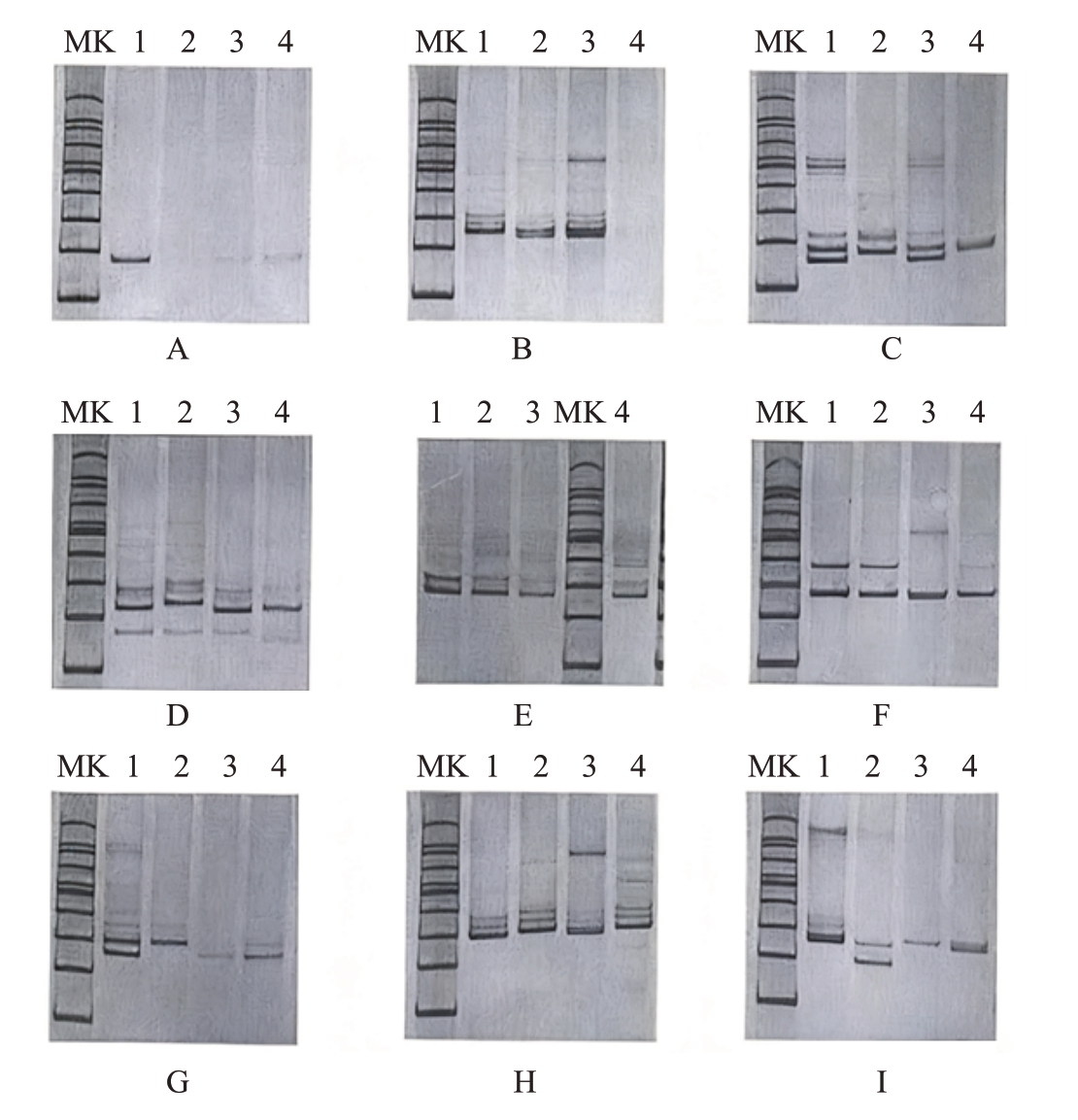
图1 秋红与3个对照品种的分子标记图谱
Fig.1 The SSR molecular markers map of Qiuhong with three control cultivars

A~I.SSR标记引物(ICMA013、ICMA003、ICMA008a、ICMA024s、ICMA023、ICMA007、ICMA012s、ICMA022、ICMA010)的扩增电泳图谱。MK.DNA Marker;1.燕山早丰;2.燕龙;3.大阪红;4.秋红。
A~I.Electrophoretogram of SSR marker primers (ICMA013,ICMA003,ICMA008a,ICMA024s,ICMA023,ICMA007,ICMA012s,ICMA022,ICMA010).MK.DNA Marker;1.Yanshanzaofeng;2.Yanlong;3.Dabanhong;4.Qiuhong.

2 主要性状

2.1 物候期

秋红的物候期因年份不同存在差异。在河北省青龙县,一般于4月下旬萌芽,5月上旬展叶,雄花初花期为6月上旬,盛花期为6月中旬,果实成熟期集中在9月12—17日(年份间略有差异),落叶期为10月下旬至11月上旬,发育期约95 d,属于中熟品种(表1)。

表1 物候期对比
Table 1 Comparisons on phenological period

2.2 植物学特征

秋红树体高大,树姿开张,1年生枝条褐色、皮孔小、中等密度、圆形、无茸毛;混合芽近圆形,中等大小;叶片长椭圆形,平均长度20.41 cm,平均宽度6.87 cm,绿色,叶背茸毛稠密,叶姿平展,先端渐尖,锯齿浅而大;秋红嫁接12 a后平均混合花枝雄花数为10.15个,平均雌花数为2.85个;结果枝长度为34.33 cm,结果枝粗度为0.86 cm,结果枝尾枝长度为9.37 cm;刺苞椭圆形,平均单苞质量49.20 g,刺苞长度8.03 cm,刺苞宽度6.62 cm,刺苞高度5.47 cm,刺束粗,密度和长度中等,质地硬,黄绿色,刺束分支角度小,成熟时十字形开裂(图2)。坚果紫褐色,色泽油亮,椭圆形,果顶果肩喙平,茸毛灰白色,筋线不明显,底座中等大小,底座接线平滑(表2)。

表2 植物学特征对比
Table 2 Comparisons on botanical characteristics
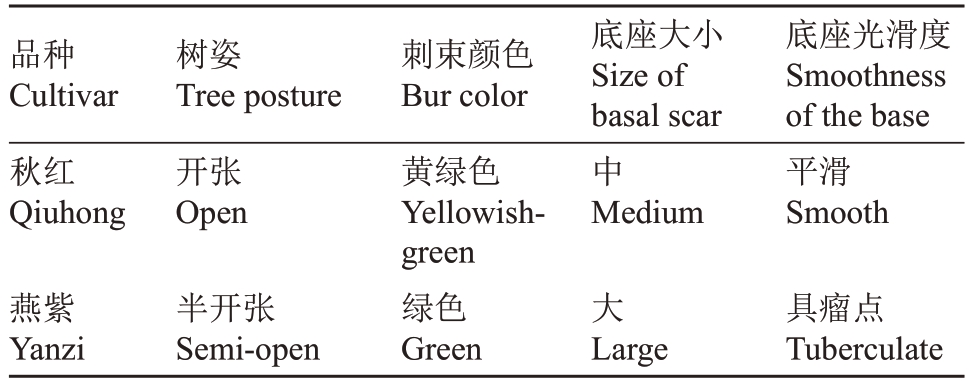
图2 板栗新品种秋红
Fig.2 A new Chinese chestnut cultivar Qiuhong

2.3 经济特性

秋红果肉黄色,质地细腻,糯性强,风味甜香,可溶性固形物含量(w,后同)22.29%,淀粉含量52.08%,蛋白质含量9.19 mg·g-1,水分含量50.23%,脂肪含量0.89%,维生素C含量39.68 mg·100 g-1。单株结果母枝数33.3个,每个母枝上结果枝数4.2个,单株结果枝数140.0个,果枝着苞数2.3个,单株结苞数326.2个,每苞坚果数2.8个,单粒质量10.69 g,单株产量10.35 kg,折合产量4 310.55 kg·hm-2,大小年现象不明显(表3)。

表3 经济特性对比
Table 3 Comparisons on economic characteristics

2.4 抗逆特性

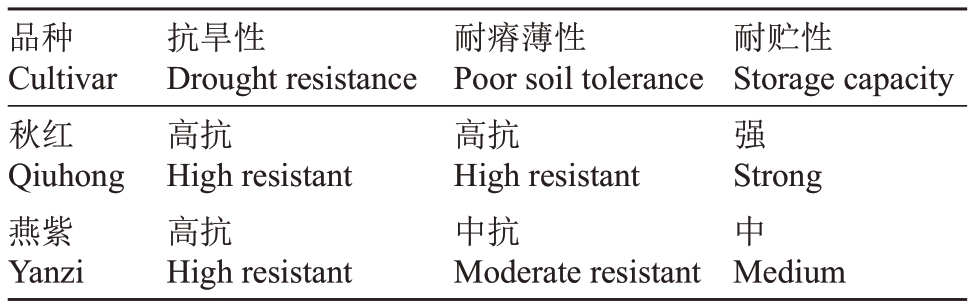
秋红抗逆性强,抗旱性强,耐瘠薄,在现有品种常出现势弱早衰的花岗岩、片麻岩陡坡山地种植时,未出现早衰现象,表明其适宜在土壤瘠薄的陡坡山地栽植(表4)。

表4 抗逆特性对比
Table 4 Comparisons on stress resistance
2.5 生长结果习性

秋红嫁接后第2年开始结果,第3年获得一定产量,第5年开始丰产稳产。该品种连续结果能力强,无大小年现象,依托其较强的耐瘠薄和抗旱特性,在无肥水条件下仍可连年稳产高产。

3 栽培技术要点

春季栽植宜在树体萌芽前进行。推荐栽植密度2 m×3 m或3 m×4 m,授粉树品种可选用燕宝、燕紫等,授粉树配置比例为10%,配置方式为行内配置。嫁接或栽植后,应结合深翻扩穴增施有机肥或压绿肥,施用量为30 000~60 000 kg·hm-2,施肥后及时灌水。6—7月,叶面喷肥可与病虫害防治结合进行。树形宜选用开心形、多主枝开心形或主干疏层形。嫁接当年,通过多次摘心增加分枝数量,促进树冠快速成形。幼树应多留枝,仅疏除个别徒长枝,其余枝条缓放,以果压冠。成龄树冬季修剪宜采用抓大放小修剪方法[6],以疏剪为主,避免短截。成龄树每年疏除2~3条大枝或若干中枝,重点疏除过高、过密、交叉及重叠大枝(中枝),小枝无需修剪,树体高度宜控制在3~5 m。病虫害防治采用综合防治策略,针对红蜘蛛,防治关键期为6月上旬,可喷洒20%哒螨灵2000~2500倍液、尼索朗1000~1500倍液、功夫乳剂1500~2500倍液等进行防治[7];针对桃蛀螟,在6月上旬至8月上旬喷洒苏云金杆菌乳剂500倍液进行防治[8];同时,应加强病虫害预测预报工作。

4 综合评价

秋红树势较强,树姿开张,产量高,坚果糯性强,甜度高,抗逆性强,生物学性状稳定,大小年结果现象不明显,适宜在燕山板栗产区及与此生态类型相似区域种植,以片麻岩、花岗岩风化土壤栽植为宜。

参考文献References:

[1] 丁琛,李玮铎,王雪松,邢晓帆,孙丰梅.我国不同产区板栗种植情况和营养成分研究现状概述[J].现代食品,2024,30(18):224-228.Ding Chen,Li Weiduo,Wang Xuesong,Xing Xiaofan,Sun Fengmei.An overview of the research status of chestnut planting and nutrient composition in different producing areas of China[J].Modern Food,2024,30(18):224-228.

[2] 张荣,赵志珩,雷洁,赵婵.中国板栗生产和贸易现状分析[J].中国果树,2025(3):141-146.Zhang Rong,Zhao Zhiheng,Lei Jie,Zhao Chan.Analysis on the production and trade status of Chinese chestnut in China[J].China Fruits,2025(3):141-146.

[3] 韩元顺,许林云,周杰.中国板栗产业与市场发展现状及趋势[J].中国果树,2021(4):83-88.Han Yuanshun,Xu Linyun,Zhou Jie.Status and trend of the development of chestnut industry in China[J].China Fruits,2021(4):83-88.

[4] 乔艳杰,刘巍,吴瑞刚,胡广隆,兰彦平,程丽莉,程运河,毛威涛.北京市板栗产业发展问题及对策研究[J].中国果树,2024(6):125-129.Qiao Yanjie,Liu Wei,Wu Ruigang,Hu Guanglong,Lan Yanping,Cheng Lili,Cheng Yunhe,Mao Weitao.Research on the development problems and countermeasures of Chinese chestnut industry in Beijing[J].China Fruits,2024(6):125-129.

[5] 张京政,齐永顺,王同坤,杨济民,佟跃武.板栗新品种‘燕紫’[J].园艺学报,2016,43(12):2491-2492.Zhang Jingzheng,Qi Yongshun,Wang Tongkun,Yang Jimin,Tong Yuewu.A new chestnut cultivar‘Yanzi’[J].Acta Horticulturae Sinica,2016,43(12):2491-2492.

[6] 张丽丽.抓大放小修剪对燕山板栗生长结果的影响[D].秦皇岛:河北科技师范学院,2020.Zhang Lili.Influence of‘cut big and retain small’pruning on growth and fruiting of Yanshan chestnut[D].Qinhuangdao:Hebei Normal University of Science&Technology,2020.

[7] 王东.板栗红蜘蛛的发生与防治技术[J].落叶果树,2024,56(5):79-80.Wang Dong.Occurrence and control techniques of chestnut red spider mite[J].Deciduous Fruits,2024,56(5):79-80.

[8] 张艳丽,崔凤敏,任淑艳.燕山地区京东板栗病虫害综合防治技术[J].落叶果树,2017,49(4):63-64.Zhang Yanli,Cui Fengmin,Ren Shuyan.Integrated pest management techniques for chestnut in the Yan Mountains region[J].Deciduous Fruits,2017,49(4):63-64.

A new Chinese chestnut cultivar Qiuhong with high quality,high yield,and strong stress resistance

Wang Meng1,Wang Xuan1,2,Liu Jing1,Yu Liyang1,Li Jingshi1,Wang Dongsheng1,Zhang Jingzheng1,2,Zhang Hai’e1,2*

(1Engineering Research Center of Chestnut Industry Technology,Ministry of Education,Hebei Normal University of Science and Technology,Qinhuangdao 066004,Hebei,China;2College of Horticulture Science and Technology,Hebei Normal University of Science and Technology/Hebei Key Laboratory of Horticultural Germplasm Excavation and Innovative Utilization,Changli 066600,Hebei,China)

Abstract: Chinese chestnut (Castanea mollissima) is a woody food crop included in the national food security strategy.However,the Chinese chestnut industry in China has long been constrained by challenges such as a narrow range of dominant cultivars and shortage of high-quality,high-yield,and stressresistant varieties,which severely hinder its high-quality development.Qiuhong,a new mid-maturing cultivar developed by the Chestnut Breeding Team of Hebei Normal University of Science&Technology through seedling selection,exemplifies such desirable traits.Its mother tree,nearly 200 years old,is located in Xiaolugou Village,Louzhangzi Town,Qinglong County,Qinhuangdao Municipality,Hebei Province.In 2005,the breeding team identified it as a primary elite selection from 170 seedling-grown trees due to its high yield,excellent quality,and tolerance to barren conditions.In the spring of 2006,1-year-old branches of the mother tree were collected for top-grafting in the on-campus experimental station,with Yanzi as the control for secondary selection evaluation.Through systematic observation,it showed stable and excellent comprehensive traits,and was confirmed as the secondary superior strain in 2012,temporarily named“Qiuhong”.Since 2012,regional trials have been carried out in three locations (Qinglong,Kuancheng and Funing),with Yanzi as the control,to systematically evaluate indica-tors such as phenology,traits,yield,quality,and stress resistance.The results of the regional trials showed that this superior strain had obvious characteristics of strong bearing capacity and high yield,with sweet and fragrant flavor,strong drought resistance,and no significant diseases or pests.In January 2025,it was certified as a forest variety by Hebei Province and officially named Qiuhong.Qiuhong has a tall tree body and an open tree posture.Its 1-year-old branches are brown,with small,moderately dense,round lenticels and no pubescence.The leaves are long elliptical,with an average length of 20.41 cm and an average width of 6.87 cm,presenting green color,dense pubescence on the abaxial surface of the leaves,and horizontal leaf posture.The fruiting branches have a length of 34.33 cm,a diameter of 0.86 cm,and a terminal branch length of 9.37 cm.The burs are oval,and the nuts are purple-brown and glossy,with oval-shaped lateral nuts,inconspicuous veins,a medium-sized base,and a smooth base line.The average single nut weight is 10.7 g.The soluble solid content is 22.29%,starch content 52.08%,protein content 9.19 mg·g-1,moisture content 50.23%,fat content 0.89%,and Vc content 39.68 mg·100 g-1.The fruit growth period of Qiuhong is approximately 95 days,and it ripens in mid-September in Qinglong County,Hebei Province.It starts bearing fruit in the 2nd year after grafting,and enters the stage of high and stable yield after 5 years.The average yield per 7-year-old tree can reach 10.35 kg.It has strong continuous fruiting ability,with no alternate bearing pattern.Qiuhong has strong stress resistance to drought and barren soil.When planted in dry granite and gneiss steep mountainous areas where existing cultivars often show weak growth and premature senescence,it does not exhibit premature senescence,making it suitable for planting in steep mountainous areas with barren soil.Planting should be carried out around the time of tree germination in spring.The recommended planting density is 2 m×3 m or 3 m×4 m,and pollinator trees should be arranged at a ratio of 10%in the same row.Suitable tree shapes include open-center shape,multi-main-branch open-center shape,or layered main-stem shape.For young trees,summer pruning with multiple pinching operations are conducted throughout the year to increase the number of branches and accelerate tree shaping.For mature trees,pinching is practiced on the vigorously growing new shoots to moderate their growth.Integrated pest and disease management should be adopted,with special attention to the damage caused by red spiders,peach fruit moth,and chestnut weevils.

Key words: Chestnut;New cultivar;Qiuhong;High quality;High yield;Stress resistance

中图分类号:S664.2

文献标志码:A

文章编号:1009-9980(2026)06-1654-05

DOI: 10.13925/j.cnki.gsxb.20250626

收稿日期:2025-11-07接受日期:2025-12-04

基金项目:河北省重点研发计划项目“干果现代种业科技创新团队(21326304D)”;板栗产业技术教育部工程研究中心(河北省教育厅2025年度教育部科研创新平台支持计划)

作者简介:王萌,女,实验师,主要从事板栗新品种选育工作。E-mail:13223362010@163.com

*通信作者 Author for correspondence.E-mail:zhang33haie4@163.com