全球气候变暖最明显的特征是气温的普遍升高和极端天气事件的频发。政府间气候变化专门委员会(Intergovernmental Panel on Climate Change,IPCC)评估指出,过去近100年,全球地表平均温度增加了0.74 ℃,预测21世纪末将升高1.1~6.4 ℃[1]。昆虫属变温动物,气温升高会对昆虫产生明显影响,主要表现为:分布范围向高海拔或高纬度地区扩增、发育速率加快、发生历期缩短、代数增加,致使一些害虫呈加剧发生的趋势[2-3]。气候变暖可通过影响或改变昆虫与其他生物的作用关系,直接或间接地影响昆虫的发生趋性,尤其对与之具有紧密联系的物种影响最为明显。例如专食性昆虫与寄主植物,由于两者对温度变化的敏感性和适应性存在差异,会干扰原有的物候匹配关系,进而对昆虫的存活和繁殖产生影响[4-6]。在较温暖的春季,越冬昆虫先于植物发育,但其所依赖的寄主植物尚处于休眠期,致使昆虫无法取食;或寄主植物发育速率先于昆虫,使昆虫错过取食窗口期,食物质量下降,导致后代发育不良,种群数量降低[7]。以卵越冬的蛾类昆虫,因春季温度的升高,卵孵化期提前于寄主萌芽期,导致孵化后的幼虫不能及时获取食物而死亡[8-9]。然而,并非所有昆虫与寄主植物的物候同步性都会受到升温的影响。已有研究指出,一些害虫在升温条件下通过调节发育状态和代谢水平等,使其发生状态与寄主的某个物候期同步,进而降低升温带来的不利影响,甚至从中获益,提高繁殖和发育速率,致使其危害加重[10-12]。因此,通过解析气候变化,尤其是早春气温升高条件下害虫适应性以及其与寄主物候之间的关系变化,对预测害虫发展趋势和危害情况等具有重要意义。
中国梨喀木虱Cɑcopsyllɑ chinensis属半翅目木虱科Psyllidae喀木虱属Cɑcopsyllɑ昆虫(以下简称梨木虱),是中国梨树产区的重要害虫种,寄主专化,主要为害亚洲梨品种。梨木虱随季节变化,其表型发生明显分化,分别为夏型梨木虱和冬型梨木虱。夏型梨木虱主要发生于梨树生长期,具有卵、若虫、成虫3种虫态,一年发生多代;冬型梨木虱主要发生于梨树休眠期,为梨木虱的越冬虫态,以成虫态为主。当春季温度逐渐升高时,冬型梨木虱结束越冬,陆续出蛰、交配、产卵,卵孵化后的子代则为夏型梨木虱[13]。梨树为落叶植物,中国梨喀木虱为梨树的专性害虫,其食物来源明显受寄主物候的影响。冬型梨木虱主要依靠体内储存的营养物质完成越冬和出蛰后的交配及初产卵等活动,所产子代活动能力弱,耐受逆境能力低,需依赖梨树幼嫩叶片、花芽等维持存活。在冬型梨木虱结束越冬到其子代完成发育期间,梨树的物候状态对其能否及时补充营养和孵化子代的存活起到了重要作用。通常情况下,昆虫对温度的敏感程度普遍高于植物[12,14],如春季温度的升高导致冬型梨木虱过早出蛰进行交配和繁殖,而此时寄主梨树尚处于休眠期。因此,冬型梨木虱无法及时补充食物而影响到其寿命和繁殖能力等,所产子代也可能由于无法及时获得食物而死亡,即气温升高将会对梨木虱种群产生不利影响。除上述情况外,冬型梨木虱还可通过调整自身的代谢水平和发育状态以适应寄主植物梨树的物候变化,气温的升高则有可能促进梨木虱的繁殖和子代的发育。鉴于以上研究现状,本研究通过设置不同的温度梯度,以探索温度对冬型梨木虱存活、繁殖以及与寄主植物间物候关系的影响,为预测梨木虱的发生发展趋势和有效防治提供理论指导。
1 材料和方法
1.1 材料
供试虫源:冬型梨木虱于2021年11月下旬采自山西农业大学果树研究所玉露香梨园(37°20′ N,112°29′ E)。采集时用塑料锤敲击梨树主枝,在枝条下用1 m×1 m采集布接收振落的冬型梨木虱。将收集的冬型梨木虱装入直径29.06 mm、高11.62 cm的50 mL离心管中,每管约50头,管盖刺小孔以供通气,管中提前放入长10 cm、宽5 cm并从长边折成瓦楞状的滤纸,于2 ℃冷藏柜中存储备用。
供试植物:2021年1月上旬在山西农业大学果树研究所玉露香梨园剪取直径为8~10 mm带有花芽的玉露香梨枝条,将采集的枝条装入塑料自封袋密封,保存于2 ℃冷藏柜中备用。
1.2 试验方法
1.2.1 不同温度条件下冬型梨木虱产卵前期、寿命等相关参数的测定 试验在光周期(12L:12D)条件下进行,设置了6组处理温度,分别为5、10、15、20、25、30 ℃,测定冬型梨木虱存活率、寿命、产卵前期、产卵历期及产卵量等指标的变化情况。测试前,从冷藏柜中取出装有冬型梨木虱的离心管,清除死亡或不活跃的虫体,并对其进行配对分装。每塑料盒中装入20头梨木虱(雌雄各半)作为1次重复,每处理温度条件下,设置6次重复。塑料盒底提前铺有浸湿的滤纸(滤纸不流水),并放置3根带有花芽的休眠梨树枝条,梨树枝条长度为3 cm,枝条末端用湿棉球包裹,棉球不外滴水。每日检查冬型梨木虱的存活、产卵等情况,定期更换新鲜的梨树枝条用于产卵,在试验过程中确保枝条始终处于休眠状态。冬型梨木虱产卵情况测定方法为:从塑料盒中取出梨树枝条于放大镜下检查花芽、芽鳞痕处是否产卵并统计数量。冬型梨木虱产卵前期为从试验开始至产卵所用的时长,产卵历期为冬型梨木虱产卵天数的总和。
1.2.2 不同温度条件下梨树枝条花芽萌发情况的测定 试验的光周期和温度条件同试验1.2.1。梨树花芽萌发情况测定前,从冷藏柜中取出5根带有花芽的梨树枝条,插入装有纯净水的三角瓶中,三角瓶口用纳米海绵填塞,确保不留空隙,将三角瓶移入不同温度(5、10、15、20、25、30 ℃)的培养箱中。梨树花芽萌发时长的记录方法为:每日检查不同温度培养箱中的梨树枝条,从试验开始至梨树花芽外包鳞片开裂并露出花骨朵时所用的时间为花芽萌发时长,并以此作为梨木虱可取食的寄主物候状态。
1.2.3 不同温度条件下梨木虱卵孵化情况的测定在60 cm×60 cm×60 cm养虫笼中放置100头梨木虱(雌雄各半),笼中央放置装有纯净水的三角瓶,瓶中插入梨树枝条,瓶口用纳米海绵填塞,确保不留空隙。养虫笼于(20±2)℃室温条件下培养,待其产卵后,每日更换新鲜的梨树枝条,更换后梨树枝条上的卵即为同批次卵。将带有同批次卵的枝条剪成2~3 cm的小段,一端用湿棉球包裹,再放入铺有滤纸的培养皿中,每皿为一次重复,每次重复卵不少于30粒,将卵放置于不同温度(5、10、15、20、25、30 ℃)的培养箱中,每处理3次重复。每日在电子放大镜下观察并记录卵的孵化情况,当卵孵化率≥50%时,所用时长记为该温度条件下的卵孵化历期。
1.2.4 冬型梨木虱产卵及花芽萌发所需的发育起点温度和有效积温计算方法 由试验1.2.1、1.2.2和1.2.3得出不同温度条件下产卵前期、花芽萌发、卵孵化历期所用时长,根据有效积温法则,利用最小二乘法计算冬型梨木虱产卵前期、花芽萌发、产卵前期和卵孵化所需的发育起点温度和有效积温。
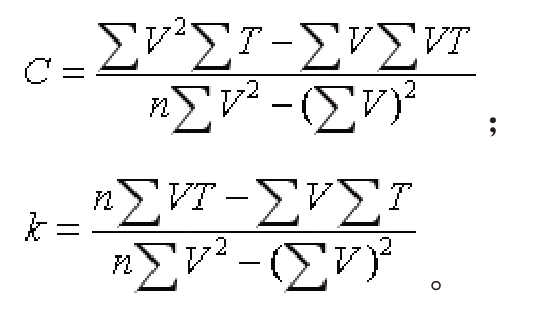
其中C为发育起点温度,K为有效积温,n为温度处理组数,V为发育速率,T为处理温度。
1.3 数据分析
使用Microsoft Excel 2013软件进行数据处理与作图,利用IBM SPSS 26软件进行单因素方差分析(One-way ANOVA),并用Duncan新复极差法进行多重比较,采用GraphPad Prism 9.5.1存活函数分析不同温度条件下冬型梨木虱的存活情况并作图。
2 结果与分析
2.1 不同温度条件下冬型梨木虱的存活率和寿命变化情况
冬型梨木虱的存活情况受温度影响变化明显,其存活率曲线变化如图1所示,当温度>10 ℃时,存活率下降明显。当死亡率为50%,不同温度条件下所用时长分别为5 ℃(24.16 d)、10 ℃(18.05 d)、15 ℃(7.25 d)、20 ℃(7.56 d)、25 ℃(5.80 d)、30 ℃(5.28 d)。冬型梨木虱平均寿命随处理温度的升高而显著下降(P<0.05)。5 ℃条件下,寿命最长为47.09 d;10 ℃次之,为36.81 d;其次为15 ℃(18.50 d)、20 ℃(13.33 d)、25 ℃(10.12 d);30 ℃寿命最短,为7.37 d(图2)。
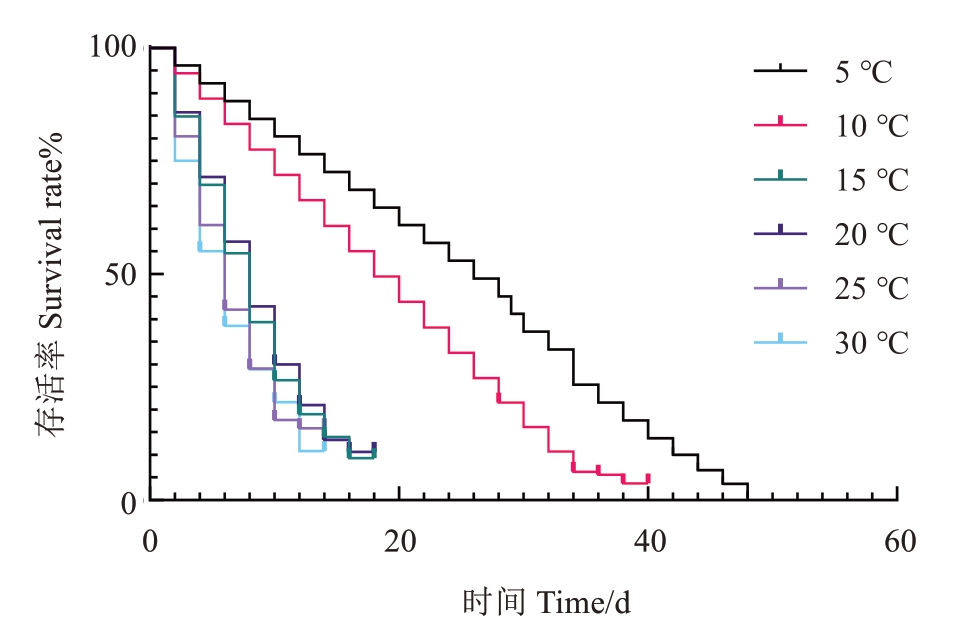
图1 不同温度条件下冬型梨木虱的存活曲线
Fig. 1 Survival curves of winter form C. chinensis under different temperatures condition
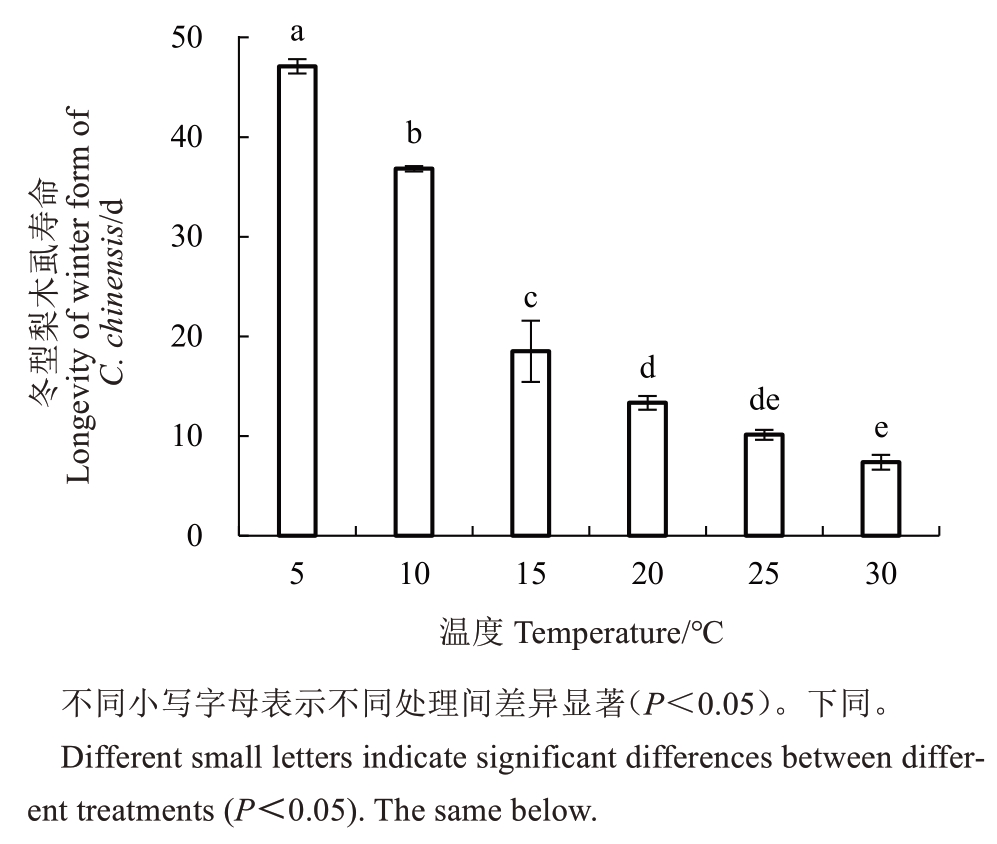
图2 不同温度条件下冬型梨木虱的寿命
Fig. 2 Life span of winter form of C. chinensis at different temperatures
2.2 不同温度条件下冬型梨木虱产卵前期时长
随着处理温度的升高,冬型梨木虱产卵前期时长逐渐缩短。5 ℃条件下,产卵前期时长最长为47 d;10 ℃次之,为21 d;15 ℃、20 ℃时,其产卵前期时长从9~11 d变化不等;当≥25 ℃时,冬型梨木虱于第3~4天便可产卵(图3)。
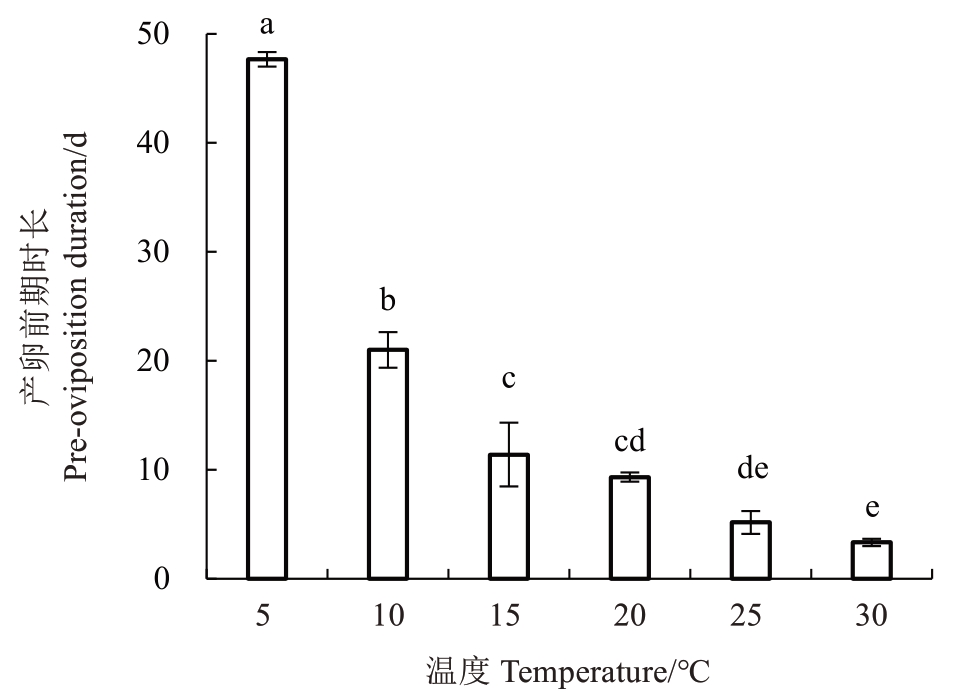
图3 不同温度条件下冬型梨木虱产卵前期时长
Fig. 3 Pre-oviposition duration of winter form of C.chinensis at different temperatures
2.3 不同温度条件下冬型梨木虱产卵历期的变化情况
不同温度条件下,冬型梨木虱产卵历期如图4所示。10~25 ℃条件下,冬型梨木虱平均产卵历期为7~9 d,显著长于5 ℃和30 ℃条件下的产卵历期(P<0.05)。
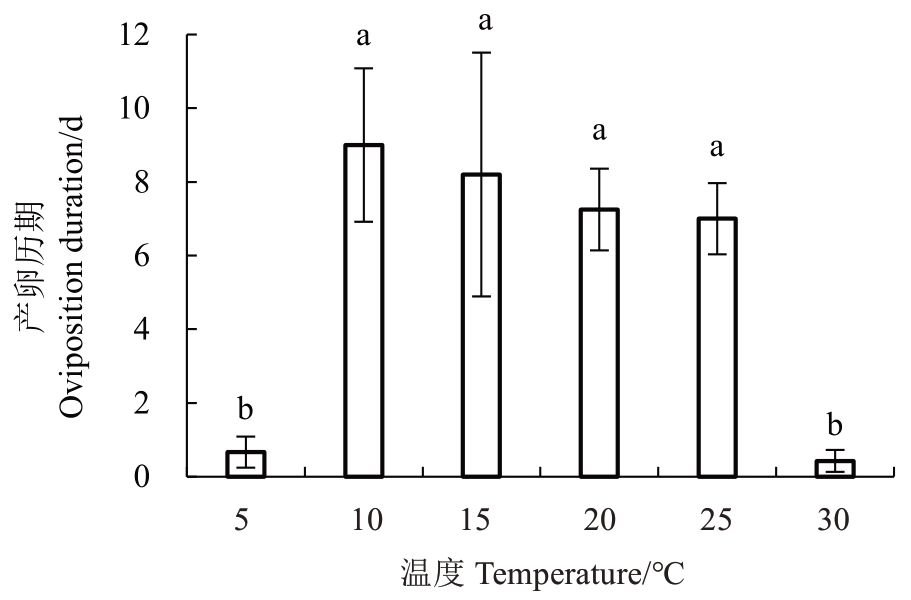
图4 不同温度条件下梨木虱产卵历期
Fig. 4 Oviposition period of C. chinensis at different temperatures
2.4 不同处理温度条件下冬型梨木虱产卵情况
冬型梨木虱在不同处理温度条件下的产卵量差异显著(P<0.05),其中以25 ℃条件下冬型梨木虱的产卵量最高,为93.5粒;20 ℃和10 ℃次之,分别为72.6粒、64.7粒;5 ℃和30 ℃产卵量最低,仅有极个别冬型梨木虱产卵(图5)。
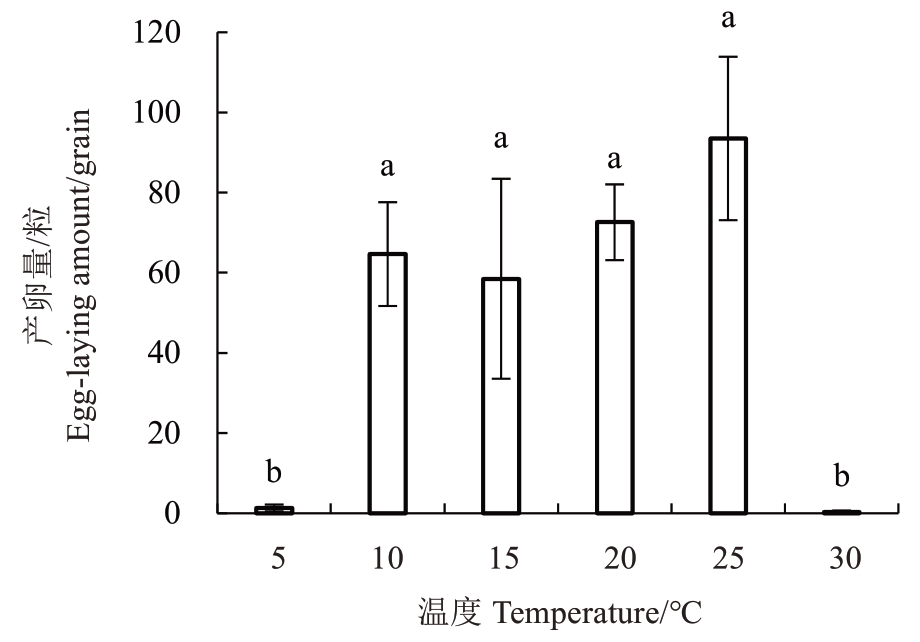
图5 不同温度条件下冬型梨木虱产卵量
Fig. 5 The egg-laying amount of winter form of C. chinensis at different temperatures
2.5 不同温度条件下冬型梨木虱卵孵化历期与梨树花芽萌发时长
不同温度条件下,冬型梨木虱卵孵化历期随温度的升高而逐渐缩短(表1)。在5 ℃条件下,30 d后冬型梨木虱卵孵化率仍未达到50%;10 ℃时卵孵化所用时间最长,为30.33 d;当≥25 ℃时,卵孵化所用时间最短,表明此温度有利于孵化;除25、30 ℃外,其余温度条件下卵孵化时长差异显著。不同温度条件下,梨树花芽萌发时长随温度升高而缩短(表1)。在25 ℃、30 ℃条件下,梨树花芽萌芽时长相近,分别为9 d和7 d;在15 ℃和20 ℃条件下,花芽萌发时长相近,分别为19 d和17 d;在10 ℃条件下,花芽萌发时间明显延长至32 d;在5 ℃条件下,其萌芽时长进一步延长至53 d。
表1 不同温度条件下冬型梨木虱卵孵化和花芽萌发时长
Table1 The incubation time of winter form of pear psylla egg and flower bud germination at different temperatures
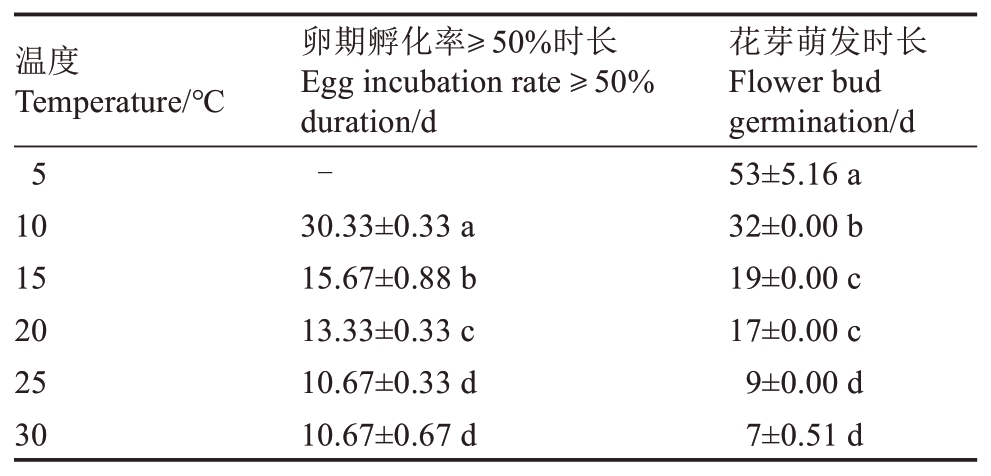
注:不同小写字母表示每列不同处理间差异显著(P<0.05)。
Note:Different small letters indicate significant differences among different treatments in the columns (P<0.05).
?
2.6 梨树花芽萌发、冬型梨木虱产卵以及子代孵化的发育起点温度及有效积温
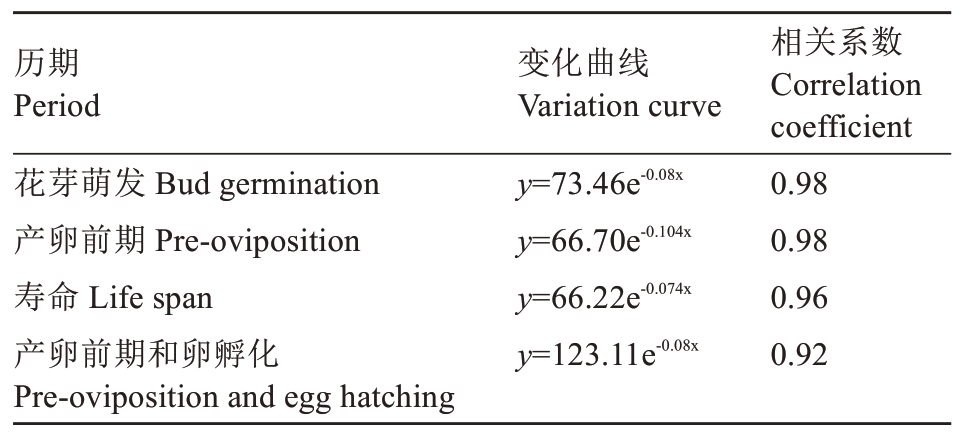
梨树花芽萌发、产卵前期、卵孵化所需的发育起点温度和有效积温的计算结果表明,梨树花芽萌发所需的发育起点温度为4.51 ℃,均高于冬型梨木虱产卵前期和卵孵化所需的温度,且所需的有效积温也不同(表2)。对花芽萌发、冬型梨木虱产卵前期、寿命以及完成子代卵孵化所需时长和温度关系进行曲线拟合,发现冬型梨木虱的寿命和花芽萌发两者拟合的曲线近乎重合,不同温度条件下冬型梨木虱产卵前期时长均短于梨树枝条花芽萌发时长,冬型梨木虱完成产卵到卵孵化所需时长与花芽萌发所需时长变化特征一致,前者为后者的1.67倍(表3和图6)。
表2 梨树花芽萌发、冬型梨木虱产卵以及子代卵孵化所需的发育起点温度及有效积温
Table 2 The developmental temperature threshold and effective accumulated temperature required for flower bud germination, oviposition and egg hatching of the winter form of pear psylla
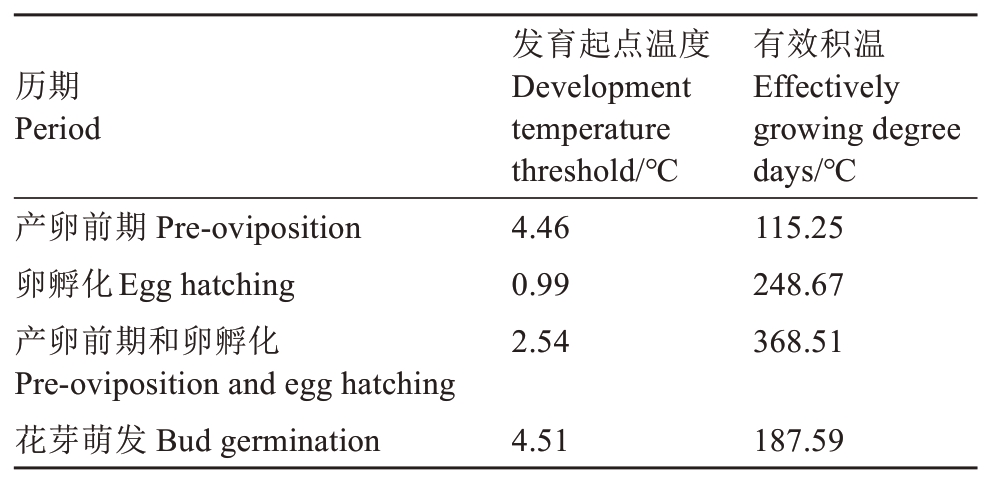
历期Period产卵前期 Pre-oviposition卵孵化Egg hatching产卵前期和卵孵化Pre-oviposition and egg hatching花芽萌发 Bud germination发育起点温度Development temperature threshold/℃4.46 0.99 2.54 4.51有效积温Effectively growing degree days/℃115.25 248.67 368.51 187.59
表3 梨树花芽萌发、冬型梨木虱产卵以及子代孵化所需时长与温度变化关系曲线
Table 3 Fitting curve of the relationship between temperature change and the time required for flower bud germination, oviposition and offspring hatching of winter form of C. chinensis
?
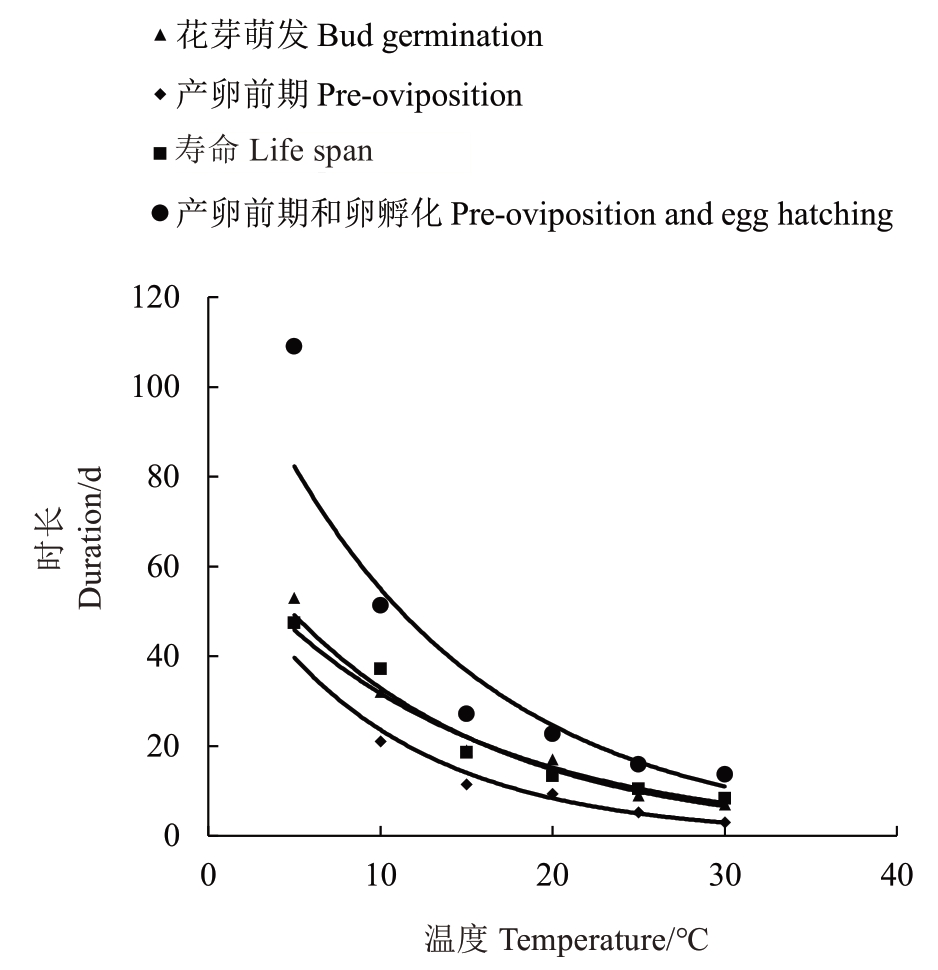
图6 梨树花芽萌发、冬型梨木虱寿命、产卵及子代孵化所需时间与温度变化的关系
Fig. 6 Pear flower bud germination, winter form of pear psylla life span, pre-oviposition as well as the time needed for egg hatching with temperature changes
3 讨 论
气候变化会不同程度地影响昆虫的发育速率、繁殖代数、产卵和活动水平,进而影响昆虫的发生和发展趋势[15]。冬型梨木虱是中国梨木虱的越冬虫态,自然条件下,冬型梨木虱并非静息状态,而是随着环境温度的升高,表现出明显的活动特征。前期预试验表明,温度是解除冬型梨木虱生殖滞育的关键因子。室内、田间观测也表明,当环境温度超过0 ℃时,冬型梨木虱便可活动,且随温度的升高其爬行和交配等活动明显增加。本研究模拟了自然条件下冬型梨木虱出蛰后的物候特点,在仅提供休眠梨树枝条作为食物的条件下,发现随着试验设置温度的升高,冬型梨木虱进入繁殖状态的时间明显缩短且卵期更为集中。当温度≥25 ℃时,3~4 d后冬型梨木虱便可产卵。与之相反,随着温度的升高,冬型梨木虱寿命明显缩减,当温度≥25 ℃,明显不利于生存。这可能是因为温度升高后,冬型梨木虱代谢水平、繁殖能力提高,能量消耗增加,但未能及时获取营养补给,导致其寿命缩减[16]。在10~25 ℃条件下,冬型梨木虱产卵历期和产卵量均无显著差异,但显著高于5 ℃和30 ℃。综合分析冬型梨木虱产卵历期、产卵量、寿命及存活情况表明,20 ℃和 25 ℃虽有利于其繁殖,但会以降低存活为代价;在缺食条件下,10 ℃~15 ℃更适宜冬型梨木虱繁殖与种群发展。
梨木虱是一类对寄主专化程度较高的昆虫,植物的物候状态或器官类型均能对其取食和发育产生影响[17]。温度的升高除影响梨木虱的繁殖和发育外,还会对其寄主植物物候产生明显影响[18]。由于梨木虱与寄主对温度敏感程度存在差异,气温的升高对两者原有物候关联将产生影响,造成物候错配进而影响梨木虱种群的变化。在本试验条件下,梨树花芽萌发与冬型梨木虱寿命、产卵前期以及子代卵孵化所需时长的变化趋势相似。梨树相较梨木虱对温度变化更敏感,当温度≥20 ℃时,其开花进程明显被促进。无论是自然还是试验条件下,相同温度下,冬型梨木虱产卵前期所需时长均短于梨树花芽萌发期,即冬型梨木虱交配产卵时,梨树处于休眠期[19]。因此,梨木虱获取食物相对困难,仅依靠自身储备的物质进行前期生存和繁殖。在此条件下,温度的升高对其繁殖和寿命均产生明显影响。在食物供应充分和温度适合的条件下,梨木虱每雌产卵量可达242粒[20],远高出本试验结果。但通过分析其寿命和梨树花芽萌发所需的时长发现,两者在10~30 ℃时变化趋势近乎一致。当冬型梨木虱储存的营养消耗殆尽时,梨树花芽正欲萌发,冬型梨木虱可及时补充营养或暂时利用其他非寄主植物,维系生存并进行繁殖,且在梨树萌芽后其繁殖力明显高于休眠期,卵期可达45 d[19-21]。在试验条件下,梨木虱和寄主植物梨树的物候同步性受温度影响较小,这种紧密联系一方面可能是两者长期相互适应的结果,另一方面可能得益于梨木虱自身在生殖、耐饥能力等方面的较强可塑性[22]。根据本试验结果,当温度低于10 ℃而高于产卵和花芽萌发所需的发育起点温度4.5 ℃时,冬型梨木虱为活跃态,而其赖以存活的寄主植物梨树未能萌发,冬型梨木虱可能因不能获取食物而死亡。自然条件下,越冬的冬型梨木虱种群数量会有明显降低[23],可能是受此影响。当温度低于4.5 ℃,冬型梨木虱繁殖能力和能耗均降低,依赖其自身储存的营养度过食物缺乏期[16]。对冬型梨木虱产卵前期和所产子代卵的孵化历期分析表明,其所需时间均明显长于梨树花芽萌发期,即子代孵化后,梨树已进入花展叶期,确保有食物可食;同时在花和卷曲嫩叶的保护下,天敌和不利天气带来的影响被减弱,自然存活率得以提高[24]。
在应对自然环境变化的过程中,昆虫进化出多种适应策略。如在不改变基因的条件下,通过表型的改变,以提高其对环境的适应性[25-27]。冬型梨木虱是中国梨喀木虱发生表型转化后的越冬虫态,具有较强的耐寒和耐饥能力。研究表明,当温度为-15 ℃时,6 h处理下其死亡率仅为4%,温度高于-15 ℃的低温对其存活影响极小[28],在5 ℃无食物条件下可存活158 d[16]。另外,可利用非寄主植物维持短暂生存[29],以抵御不利环境的影响。在气候变暖的背景下,冬季低温及不利条件对冬型梨木虱的影响减弱,反而在升温条件下梨树生长期将增加[30,18]。梨木虱取食时间的延长,会使其繁殖速度加快、代数增加,进而加剧对梨树的危害。此外,在梨木虱和其天敌的营养级水平上,气温的升高可能改变原有的物候联系模式。随着梨木虱的提早发生,而以梨木虱为猎物的天敌则可能发生滞后或错过适合寄生的窗口期,从而降低天敌自上而下的控制作用[31],加剧了梨木虱对梨树的危害趋势。本研究探索了不同温度条件对梨木虱和寄主的影响,而在自然条件下,梨木虱和寄主植物梨树的发育状态和物候变化是否受光周期、冷激等其他因素的影响[32-33],仍需进一步探索和研究。
4 结 论
冬型梨木虱与寄主梨树的物候同步性强,对温度响应一致,其物候关系受温度变化影响小。但春季温度的升高,特别是当温度≥20 ℃时,显著促进梨木虱繁育,加剧对梨树的危害。本研究对理解和应对气候变化下的害虫管理具有指导意义。
[1] KATO H. Outline of the IPCC fourth assessment report (AR4)[J] .Journal of Geography (Chigaku Zasshi),2007,116(6):798-810.
[2] 杜尧,马春森,赵清华,马罡,杨和平. 高温对昆虫影响的生理生化作用机理研究进展[J] . 生态学报,2007,27(4):1565-1572.DU Yao,MA Chunsen,ZHAO Qinghua,MA Gang,YANG Heping. Effects of heat stress on physiological and biochemical mechanisms of insects:A literature review[J] . Acta Ecologica Sinica,2007,27(4):1565-1572.
[3] 孙玉诚,郭慧娟,戈峰. 昆虫对全球气候变化的响应与适应性[J] . 应用昆虫学报,2017,54(4):539-552.SUN Yucheng,GUO Huijuan,GE Feng. Progress in research on the responses of insects to global climate change[J] . Chinese Journal of Applied Entomology,2017,54(4):539-552.
[4] 陈瑜,马春森. 气候变暖对昆虫影响研究进展[J] . 生态学报,2010,30(8):2159-2172.CHEN Yu,MA Chunsen. Effect of global warming on insect:A literature review[J] . Acta Ecologica Sinica,2010,30(8):2159-2172.
[5] HAMANN E,BLEVINS C,FRANKS S J,JAMEEL M I,ANDERSON J T. Climate change alters plant-herbivore interactions[J] . New Phytologist,2021,229(4):1894-1910.
[6] SCHWARTZBERG E G,JAMIESON M A,RAFFA K F,REICH P B,MONTGOMERY R A,LINDROTH R L. Simulated climate warming alters phenological synchrony between an outbreak insect herbivore and host trees[J] . Oecologia,2014,175(3):1041-1049.
[7] PARMESAN C. Influences of species,latitudes and methodologies on estimates of phenological response to global warming[J] .Global Change Biology,2007,13(9):1860-1872.
[8] VISSER M E,HOLLEMAN L J M. Warmer springs disrupt the synchrony of oak and winter moth phenology[J] . Proceedings of the Royal Society of London. Series B,2001,268(1464):289-294.
[9] WATT A D,MCFARLANE A M. Winter moth on sitka spruce:Synchrony of egg hatch and budburst,and its effect on larval survival[J] . Ecological Entomology,1991,16(3):387-390.
[10] VAN ASCH M,VAN TIENDEREN P H,HOLLEMAN L J M,VISSER M E. Predicting adaptation of phenology in response to climate change,an insect herbivore example[J] . Global Change Biology,2007,13(8):1596-1604.
[11] FORREST J R K. Complex responses of insect phenology to climate change[J] . Current Opinion in Insect Science,2016,17:49-54.
[12] JU R T,GAO L,WEI S J,LI B. Spring warming increases the abundance of an invasive specialist insect:Links to phenology and life history[J] . Scientific Reports,2017,7:14805.
[13] 赵龙龙,卫洁,刘朝红,胡增丽,张未仲,马瑞燕. 中国梨木虱关键发生期与气温关系研究[J] . 上海农业学报,2021,37(5):68-72.ZHAO Longlong,WEI Jie,LIU Zhaohong,HU Zengli,ZHANG Weizhong,MA Ruiyan. Study on the relation between key occurrence periods of pear psylla and air temperature[J] . Acta Agriculturae Shanghai,2021,37(5):68-72.
[14] FORKNER R E,MARQUIS R J,LILL J T,LE CORFF J. Timing is everything? Phenological synchrony and population variability in leaf-chewing herbivores of Quercus[J] . Ecological Entomology,2008,33(2):276-285.
[15] KARUPPAIAH V,SUJAYANAD G K. Impact of climate change on population dynamics of insect pests[J] . World Journal of Agricultural Sciences,2012,8(3):240-246.
[16] 刘朝红,胡增丽,张未仲,赵龙龙. 外源水分和温度对冬型梨木虱存活的影响[J] . 环境昆虫学报,2020,42(6):1409-1414.LIU Zhaohong,HU Zengli,ZHANG Weizhong,ZHAO Longlong.Effects of external water and temperature on survival of winterform pear psylla[J] . Journal of Environmental Entomology,2020,42(6):1409-1414.
[17] MAUCK K E,GEBIOLA M,PERCY D M. The hidden secrets of psylloidea:Biology,behavior,symbionts,and ecology[J] . Annual Review of Entomology,2024,69:277-302.
[18] REEVES L A,GARRATT M P D,FOUNTAIN M T,SENAPATHI D. Climate induced phenological shifts in pears-A crop of economic importance in the UK[J] . Agriculture,Ecosystems & Environment,2022,338:108109.
[19] 赵龙龙,张未仲,胡增丽,刘朝红,韩凤,李捷. 冬型中国梨木虱在梨树不同部位的产卵特点[J] . 植物保护,2019,45(4):201-204.ZHAO Longlong,ZHANG Weizhong,HU Zengli,LIU Zhaohong,HAN Feng,LI Jie. Oviposition characteristics of wintertype pear psylla on different sites of pear tree[J] . Plant Protection,2019,45(4):201-204.
[20] 张博晨,张蕊,许双叶,朱兴秋,连少博,郝赤,庾琴. 不同温度下中国梨木虱的两性生命表[J] . 应用昆虫学报,2024,61(2):279-286.ZHANG Bochen,ZHANG Rui,XU Shuangye,ZHU Xingqiu,LIAN Shaobo,HAO Chi,YU Qin. Two-sex life tables of Psyllɑ chinensis (Hemiptera:Psyllidae) at different temperatures[J] .Chinese Journal of Applied Entomology,2024,61(2):279-286.
[21] HORTON D R. Oviposition by overwintering morph of pear psylla (Homoptera:Psyllidae) with information on conditioning?[J] .Environmental Entomology,1990,19(2):357-361.
[22] SGRÒ C M,TERBLANCHE J S,HOFFMANN A A. What can plasticity contribute to insect responses to climate change[J] . Annual Review of Entomology,2016,61:433-451.
[23] HORTON D R,HIGBEE B S,UNRUH T R,WESTIGARDI P H. Spatial characteristics and effects of fall density and weather on overwintering loss of pear psylla (Homoptera:Psyllidae)[J] .Environmental Entomology,1992,21(6):1319-1332.
[24] SOLOMON M G,CRANHAM J E,EASTERBROOK M A,FITZGERALD J D. Control of the pear psyllid,Cɑcopsyllɑ pyricolɑ,in South East England by predators and pesticides[J] . Crop Protection,1989,8(3):197-205.
[25] 王小艺,杨忠岐,魏可,唐艳龙. 昆虫翅型分化的表型可塑性机制[J] . 生态学报,2015,35(12):3988-3999.WANG Xiaoyi,YANG Zhongqi,WEI Ke,TANG Yanlong. Mechanisms of phenotypic plasticity for wing morph differentiation in insects[J] . Acta Ecologica Sinica,2015,35(12):3988-3999.
[26] 高书晶,郭娜,王宁,韩海斌,林克剑,董瑞文,贺兵. 飞蝗表型可塑性研究进展[J] . 中国草地学报,2021,43(1):104-110.GAO Shujing,GUO Na,WANG Ning,HAN Haibin,LIN Kejian,DONG Ruiwen,HE Bing. Advances on phenotypic plasticity in Locustɑ migrɑtorɑ[J] . Chinese Journal of Grassland,2021,43(1):104-110.
[27] 王晓迪,冀顺霞,申晓娜,刘万学,万方浩,吕志创. 温度胁迫下昆虫表观遗传机制的研究进展[J] . 中国生物防治学报,2021,37(3):598-608.WANG Xiaodi,JI Shunxia,SHEN Xiaona,LIU Wanxue,WAN Fanghao,LÜ Zhichuang. Research advance of epigenetic mechanism in temperature stress[J] . Chinese Journal of Biological Control,2021,37(3):598-608.
[28] 赵龙龙,张未仲,胡增丽,刘朝红. 低温和外源水分对中国梨木虱耐寒性和存活率的影响[J] . 西北农业学报,2022,31(11):1514-1520.ZHAO Longlong,ZHANG Weizhong,HU Zengli,LIU Zhaohong. Effects of low temperature and external water on cold tolerance and surival rate of Cɑcopsyllɑ chinensis[J] . Acta Agriculturae Boreali-occidentalis Sinica,2022,31(11):1514-1520.
[29] 赵龙龙,高欣,薛涪,冀佳悦,魏明峰,马瑞燕. 中国梨喀木虱对六种非寄主越冬植物的适应性[J] . 植物保护学报,2024,51(3):592-599.ZHAO Longlong,GAO Xin,XUE Fu,JI Jiayue,WEI Mingfeng,MA Ruiyan. Adaptability of the winter form of Chinese pear psylla Cɑcopsyllɑ chinensis on six non-host overwintering plants[J] . Journal of Plant Protection,2024,51(3):592-599.
[30] IBÁÑEZ I,PRIMACK R B,MILLER-RUSHING A J,ELLWOOD E,HIGUCHI H,LEE S D,KOBORI H,SILANDER J A. Forecasting phenology under global warming[J] . Philosophical Transactions of the Royal Society of London. Series B,Biological Sciences,2010,365(1555):3247-3260.
[31] DAMIEN M,TOUGERON K. Prey-predator phenological mismatch under climate change[J] . Current Opinion in Insect Science,2019,35:60-68.
[32] 胡植,王焕炯,戴君虎,葛全胜. 利用控制实验研究植物物候对气候变化的响应综述[J] . 生态学报,2021,41(23):9119-9129.HU Zhi,WANG Huanjiong,DAI Junhu,GE Quansheng. Using controlled experiments to investigate plant phenology in response to climate change:Progress and prospects[J] . Acta Ecologica Sinica,2021,41(23):9119-9129.
[33] ASCH M V,VISSER M E. Phenology of forest caterpillars and their host trees:The importance of synchrony[J] . Annual Review of Entomology,2007,52:37-55.