桃[Prunus persica (L.) Batsch]起源于中国,具有悠久的栽培历史[1-5]。作为重要的经济作物,桃在我国乃至全球都有着广泛的种植和消费市场[6-8]。桃种质资源的研究与利用对培育新品种、提高果实品质、增强抗病性和适应性具有重要意义[9-13]。
桃种质资源包括各种野生种、地方品种、改良品种以及相关的遗传材料。中国是桃的起源中心,拥有极其丰富的种质资源。这些资源在形态特征、生长习性、果实品质等方面表现出丰富的多样性,为桃的遗传育种提供了宝贵的素材。
我国一直高度重视桃种质资源的调查、收集和保存,广泛开展了全国桃种质资源的普查以及建立资源圃异地集中保存的相关工作[14-16]。1965 年,全国果树科研规划(1962—1972),在南京设置全国桃原始材料圃;1981 年,农业部下达与江苏省农业科学院联合建设国家果树种质桃、草莓圃(南京)任务;1985 年,农业部科技司与江苏省农业科学院正式签订建圃协议,并启动建设;1988 年,国家果树种质南京桃、草莓圃建成并通过农业部验收;2003 年,申请获得农业部种子工程项目250 万元用于改扩建,2005 年竣工;2015 年,再次申请获得农业部种子工程项目705 万元(其中国拨经费540 万元,江苏省农科院自筹165 万元),用于资源圃的第二次改扩建,2018年竣工。截至2024年资源圃占地面积江苏省农业科学院本部5.33 hm2,江苏省农业科学院溧水植物基地6.67 hm2,保存桃种质资源1300余份,涵盖普通桃、光核桃、山桃、甘肃桃、陕甘山桃、新疆桃6个种。
1 桃种质资源的保存现状
1.1 桃资源收集保存总体情况
我国自1956 年以来,在全国多地开展了桃资源调查,基本查清桃属植物有6 个种16 个变种或类型[1-3],80年代初,在北京、南京、郑州建立了3个国家桃种质资源圃,保存种质1000 余份,截至2024 年共收集保存4000余份桃种质资源。
江苏省农业科学院的桃资源收集保存可追溯到1947 年中央农业实验所,但有计划、有重点的收集保存始于20 世纪50 年代,重点收集华东地区水蜜桃、蟠桃、硬肉桃等地方品种以及少量华北品种,1957年自陕甘宁桃产区的武功、富平、宁县等地收集品质优良且加工性能好的黄肉桃品种,从云南、河北引进黄桃品种,从日本、欧美引进桃品种,至1965 年原始材料圃收集桃品种176份,经整理保存147份。
1966—1976年间,因文化大革命,资源研究曾一度中断;1978 年后在汪祖华带领下逐步恢复,除继续调查收集华东地区桃品种外,重点收集国内外新育成品种(品系),尤其注意适合加工制罐桃资源的收集保存,至1981年,合计保存桃品种185份。
1982 年,江苏省农科院园艺研究所组织对云南呈贡、晋宁、路南、蒙自等桃产区考察,收集以黏核、不溶质、低温需求量少的地方黄、白桃品种29 个,采集9 个品种的花粉,并在路南地区发现与深沟型光核桃大小、形状、沟纹相似的毛桃。
1983 年重点收集华北地区桃品种资源,前往山东肥城与益都,收集优良品系16 个,同时收集了河北的雪桃、迎霜和青岛的寒露蜜,以及国外黄肉罐藏桃新品种等,总计62份品种资源。
1984—1985年,参与由辽宁省果树研究所组织的南方李、杏种质资源调查,收集云、贵、闽、桂等地代表桃品种。
1986—1990年,随着资源研究的深入和育种工作的进展,开展了野生、砧木类种质的收集,仅从法国就一次引进了GF43、GF677等桃砧木种质7份。
1992—1993年,参与农作物种质资源川东北、川西南考察,发现了晚熟地方品种冬桃,以及光滑型、浅沟型、深沟型3个类型的桃原生种“光核桃”。
2005 年赴西藏、新疆南部地区考察,收集光核桃与新疆桃。2008 年考察甘肃,收集甘肃桃与地方黄桃资源。
自2019 年国家园艺种质资源库挂牌成立以来,国家桃草莓种质资源圃(南京)(图1)在其资助下,桃种质资源收集保存、鉴定评价、分发利用工作得以快速、稳步推进。
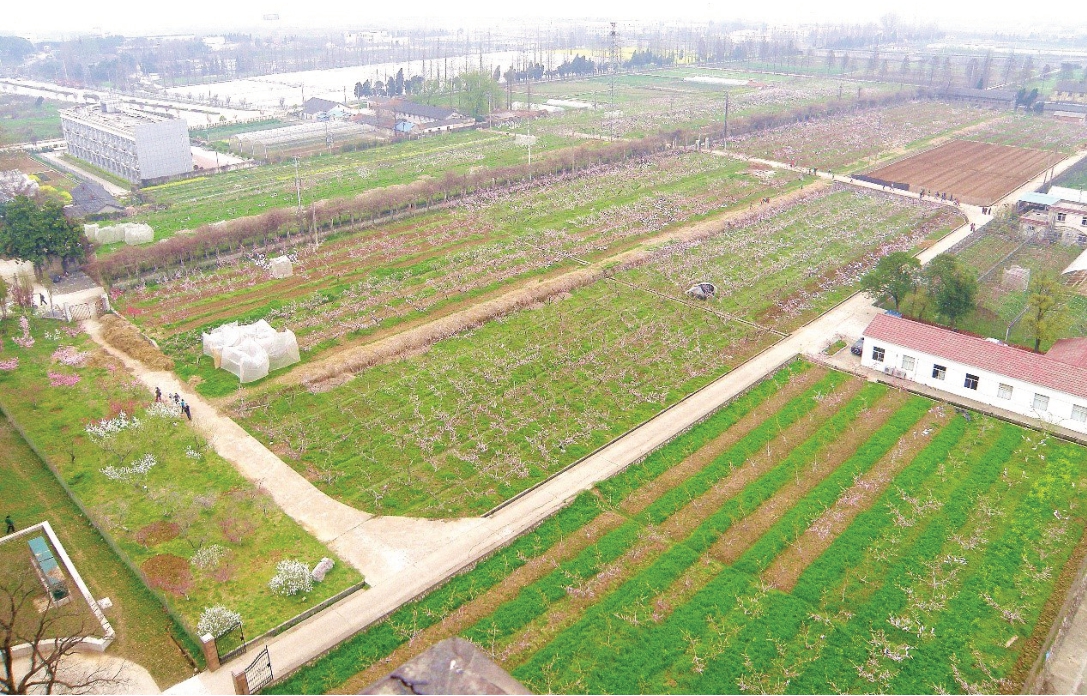
图1 国家桃种质资源圃(南京)全景
Fig.1 Panorama of National Peach Germplasm Repository (Nanjing)
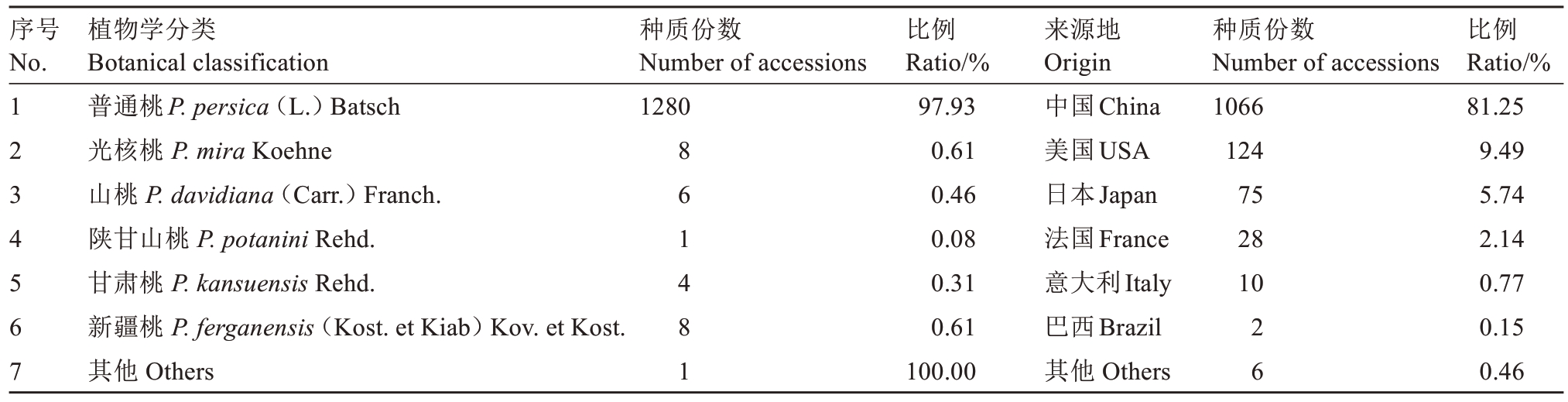
截至2024 年底,国家果树种质南京桃资源圃收集保存桃种质资源1307 份,包括普通桃[P.persica(L.) Batsch]、光核桃(P.mira Koehne)、山桃[P.davidiana (Carr.) Franch.]、陕甘山桃(P.potanini Rehd.)、甘肃桃(P.kansuensis Rehd.)、新疆桃[P.ferganensis(Kost.et Kiab) Kov.et Kost.]6 个种和蟠桃(P.persica var.compressa Bean.)、油桃[P.persica var.nectarina (Ait.) Maxim.]、观赏桃、矮化桃等变种。桃国外种质245份,来自美国、日本、巴西、法国、意大利等11个国家,占比18.75%(表1),其中编目入圃799份。
表1 桃种质资源保存概况
Table 1 Overview of cataloguing and preserving peach germplasm resources in the nursery
序号No.1 2 3 4 5 6 7植物学分类Botanical classification普通桃P.persica (L.) Batsch光核桃 P.mira Koehne山桃 P.davidiana (Carr.) Franch.陕甘山桃 P.potanini Rehd.甘肃桃 P.kansuensis Rehd.新疆桃 P.ferganensis (Kost.et Kiab) Kov.et Kost.其他 Others种质份数Number of accessions 1280 8 6 1 4 8 1比例Ratio/%97.93 0.61 0.46 0.08 0.31 0.61 100.00来源地Origin中国China美国USA日本Japan法国France意大利Italy巴西Brazil其他 Others种质份数Number of accessions 1066 124 75 28 10 2 6比例Ratio/%81.25 9.49 5.74 2.14 0.77 0.15 0.46
1.2 发掘的优异种质
种质资源评价2010 年之前,集中于高品质、耐贮性、多样化;2010 年至今,在之前的基础上,结合生产中的实际问题,聚焦抗病性(抗流胶病、抗褐腐病)、适应性(短低温、耐涝性)等性状[17-26]。通过鉴定评价,筛选出抗流胶病、短低温、红肉桃、观赏鲜食兼用、窄叶桃、柱形桃、耐贮种质,以及品质性状优良种质30余份[27-31](表2)。
表2 资源圃优异桃种质资源概况
Table 2 Overview of excellent peach germplasm resources resources in the nursery

种质名称Names of accession 99-13-9 Flordacrest Flordaglo Flordaking SM620 Sunraycer Tropicprince TX2C104N TX4D170 TX4F244C超五月火Chao Wu Yue Huo台农1号Springhoney No.1湖景蜜露Hujingmilu接桃Jie Tao灵山毛桃9号Lingshan Maotao 9南京白沙Nanjing Baisha南山甜桃Nanshan Tiantao农神Nongshen日川白凤Hikawa Hakuhou嵊州毛桃2号Shengzhou Maotao 2嵊州毛桃7号Shengzhou Maotao 7酥红Suhong桃巴旦Tao Ba Dan西山蟠桃Xishan Pantao霞脆Xiacui霞晖1号Xiahui 1宣城甜桃Xuanchen Tiantao雪香露Xuexianglu野鸡红Yejihong银河Galaxy有名白桃Yumyeoung种质类型Biological status of accession品系Breeding line选育品种Breeding cultivar选育品种Breeding cultivar选育品种Breeding cultivar选育品种Breeding cultivar选育品种Breeding cultivar选育品种Breeding cultivar选育品种Breeding cultivar选育品种Breeding cultivar选育品种Breeding cultivar选育品种Breeding cultivar选育品种Breeding cultivar选育品种Breeding cultivar地方品种Local cultivar野生资源Wild地方品种Local cultivar地方品种Local cultivar地方品种Local cultivar选育品种Breeding cultivar野生资源Wild野生资源Wild优异性状Excellent character优质、抗褐腐病High-quality, brown rot resistance早熟、低需冷量Early maturity, low chilling requirement低需冷量low chilling requirement早熟、低需冷量Early maturity, low chilling requirement优质、抗褐腐病High-quality, brown rot resistance早熟、低需冷量Early maturity, low chilling requirement早熟、低需冷量Early maturity, low chilling requirement早熟、低需冷量Early maturity, low chilling requirement早熟、低需冷量Early maturity, low chilling requirement早熟、低需冷量Early maturity, low chilling requirement特早熟、低需冷量Especial-early maturity, low chilling requirement早熟、低需冷量Early maturity, low chilling requirement优质High-quality高产、优质、抗褐腐病High yield, high quality, brown rot resistance高产、耐涝、抗流胶病High yield, waterlogging resistance, and gummosis resistance高抗流胶病High resistance to gummosis高产、低需冷量High yield and low cooling requirement优质、抗褐腐病High-quality, brown rot resistance优质、抗褐腐病High-quality, brown rot resistance高产、耐涝、抗流胶病High yield, waterlogging resistance, and gummosis resistance高产、耐涝High yield, waterlogging resistance原产国Origin country中国China美国USA美国USA美国USA美国USA美国USA美国USA美国USA美国USA美国USA中国China中国China中国China中国China中国China中国China中国China中国China日本Japan中国China中国China地方品种Local cultivar野生资源Wild地方品种Local cultivar选育品种Breeding cultivar选育品种Breeding cultivar地方品种Local cultivar中国China中国China中国China中国China中国China中国China地方品种Local cultivar地方品种Local cultivar选育品种Breeding cultivar选育品种Breeding cultivar优质、抗褐腐病High-quality, brown rot resistance抗流胶病、低需冷量Gummosis resistance, low chilling requirement优质High-quality优质、耐贮运High-quality, durable storage优质、抗褐腐病High-quality, brown rot resistance优质、抗褐腐病High-quality, brown rot resistance优质、抗褐腐病High-quality, brown rot resistance优质、红肉High-quality, blood flesh优质High-quality优质、耐贮运High-quality, durable storage窄叶桃Zhaiye Tao猪血桃Zhuxue Tao地方品种Local cultivar地方品种Local cultivar优质、窄叶High-quality, narrow leaf优质、抗褐腐病High-quality, brown rot resistance中国China中国China美国USA韩国The Republic of Korea中国China中国China
高品质种质为湖景蜜露和银河。
耐贮种质为有名白桃:收集自韩国京畿道,耐贮性强,典型的溶质型硬质桃。霞脆:耐贮性极强,不溶质型硬质桃。
抗性种质南京白沙:树体生长健壮,树姿半开张,枝干树皮粗糙,高抗流胶病。桃巴旦:树体生长健壮,树姿半开张,枝干树皮光滑,高抗流胶病。
短低温种质Sunraycer:短低温种质,需冷量250 h,本圃于2001 年从美国引进该种质,通过鉴定评价,认为该种质需冷量少,开花早,果实着色好,外观美丽,但风味酸,难以直接推广利用。为此,本所利用这一种质与我国优质桃杂交,获得的杂种后代中已显示出需冷量少、风味甜的单株。
特异种质野鸡红:江苏地方红肉桃种质。果实卵圆形,果肉红色,风味甜,该种质既可以直接在生产中推广应用,又可以作为红肉桃育种的亲本材料。“窄叶桃”:叶片比普通桃叶片窄,通风透光性较好(图2)。

图2 筛选出的部分优异种质
Fig.2 Some of the excellent germplasms selected
A.高品质水蜜桃湖景蜜露;B.高品质蟠桃银河;C.抗流胶种质南京白沙;D.抗流胶种质桃巴旦;E.特异种质窄叶桃;F.红肉种质野鸡红;G.耐贮运种质有名白桃;H.耐贮运高品质种质霞脆;I.低需冷量油桃种质Sunraycer。
A.High-quality peach Hujingmilu; B.High-quality flat peach Yinhe; C.Gummosis-resistant germplasm Nanjing Baisha; D.Gummosis-resistant germplasm Taobadan; E.Special germplasm Zhaiye Tao; F.Red-fleshed germplasm Yejihong; G.Germplasm with good storage and transportation tolerance Youming Baotao; H.High-quality germplasm with good storage and transportation tolerance Xiacui; I.Low-chilling-requirement nectarine germplasm Sunraycer.
2 保存资源的创新利用
2.1 支撑基础研究
浙江大学利用资源圃提供的96份桃种质资源,开展了国家自然科学基金“应用SSR 分子标记解析水蜜桃果实风味性状的遗传控制”相关研究[32-34];利用这些资源,浙江大学参与欧盟项目“Fruit Breedomics”,正在利用大量SNP标记筛选中国桃种质资源。
南京农业大学利用资源圃提供的雨花1 号,开展了“桃果实果胶质降解相关基因的克隆与表达分析”研究,成功克隆了α-L-阿拉伯呋喃糖苷酶(PpARF2)、果胶裂解酶(PpPEL1和PpPEL2)及β-半乳糖苷酶(PpGAL1 和PpGAL2)等基因,并研究了这些基因在果实不同发育阶段的表达特性[35]。
江苏省农业科学院利用保存资源开展国家自然科学基金“桃核心种质构建及优异基因资源的挖掘利用”,构建了核心种质库;国家自然科学基金“桃同株花色、叶色及果色嵌合体的突变机制研究”利用特异资源金陵锦桃分析了桃花色、叶色及果色嵌合体的突变机制;利用资源圃黄桃、油桃资源研究与桃果肉颜色和果皮茸毛性状相关的SSR 标记,筛选获得分别与桃白肉、有毛性状连锁的SSR 标记UDP96-005 与CPSCT030,并为发掘与桃果肉颜色和茸毛性状相关基因奠定了基础[36];以油蟠桃与普通桃的F1杂交分离群体74 个单株为试验材料,对桃果实的扁平和圆形性状进行了SSR分子标记研究。用分离群体分组分析法(Bulked segregant analysis,BSA),通过对21 对SSR 引物进行筛选,获得了SSR 标记MA014a,在20 个桃栽培品种中进行验证,符合率达到90.00%,表明SSR 标记MA014a 标记可用于桃果实形状的分子标记辅助育种[37];利用SRAP 标记技术以寿星桃与普通桃的F1代杂交分离群体共123 个单株(矮生型63 株,普通型60 株)为试材,对控制桃高/矮性状的基因进行分子定位,从而为明确桃的矮化机制提供依据,用分离群体分组分析法(Bulked Segregant Analysis,BSA),通过对336 对SRAP 引物的筛选,获得了1 个与高/矮性状连锁距离为3.2 cM的SRAP标记。利用该标记对本试验群体以外的34个桃品种的DNA 进行扩增,符合率达到88.2%,初步认为可以用于桃的分子辅助育种[10];同时开展酚类物质关联分析、褐腐病抗性机制及需冷量相关研究等基础研究。在酚类物质关联分析中,发现儿茶素和新绿原酸新的关联位点,且发现Prupe.7G22560 0、Prupe.2G009100、Prupe.8G029200 可能是调控这2个酚类组分的关键基因;利用215 份表型和重测序数据GWAS 分析,初步关联到382 个需冷量显著SNP 和580 个基因,其中编码区和调控区的显著SNP和基因分别为157个和184个;通过比较感褐腐病霞晖6 号与抗褐腐病霞晖8 号果实接种后12、24、36、48 h 的转录组数据,挖掘到24 个响应病原菌入侵的NLRs免疫识别受体基因[38]。
这些资源的共享利用,为提升我国桃种质资源的基础理论研究水平发挥了重要作用。
2.2 支撑育种
我国是桃的原产地之一,桃种质资源种类繁多,包括野生种、半野生种和栽培种,它们有广泛的遗传多样性。这种多样性为育种提供了丰富的遗传材料,有助于培育出适应不同环境、具有不同特性的桃树品种。
抗逆性:一些桃种质资源具有很强的抗逆性,如抗寒、抗旱、抗涝、抗病虫害等。利用这些特性,育种者可以提高新品种桃的抗逆性,使桃树能够在更广泛的条件下生长,扩展桃的种植区域[18,39]。
果实品质:不同的桃种质资源在果实的大小、颜色、口感、香味等方面有着不同的特点。利用这些资源,可以培育出果实品质更优的新品种,满足市场对不同品质桃的需求,提高桃的商业价值[21-22,24,40]。
开花结实特性:一些种质资源具有早花、晚花、早熟、晚熟、丰产等优良特性。利用这些特性,可以开发新的桃树品种,延长桃的供应期,满足不同季节市场的需要。
适应性:中国幅员辽阔,气候类型多样,各地的桃种质资源对不同的生态条件有着不同的适应性。通过引入和利用不同地区特有的桃种质资源,可以培育出更加适应特定地区条件的新品种,有利于桃树种植向更多地区推广[25-26]。
利用资源圃提供的白花、雨花露、朝晖、幻想、早红2 号等优异种质,江苏省农科院于20 世纪70—80年代培育出了雨花1 号、雨花2 号、霞光等桃品种,2000年之后育成了霞晖5号、霞晖6号、霞晖8号、霞晖10 号等霞晖系列水蜜桃品种,这些水蜜桃品种已在无锡、常州、张家港等产区大面积推广,获得较好的经济效益;育成的紫金红系列、金霞油蟠桃、金霞早油蟠等多个油桃、油蟠桃新品种已在全国多地推广种植,广受好评;其他育种单位如山东果树所、石家庄果树所等利用雨花露培育了春明和甜丰等品种,极大丰富了栽培桃的类型。
2.3 支撑产业提升
我国桃产业由快速增长期进入缓慢增长期,由数量增长向提质增效转变。当前全国桃种植面积80万hm2,产量1300万t,人均桃果占有量9.25 kg·人-1。全国范围内涌现了一批优势产区;桃果品质由“大众化”向“精品化”转变,新品种不断推出,老品种被逐步取代。例如:苏南产区阳山水蜜桃的发展壮大与省内外科研院所的技术支撑息息相关。阳山水蜜桃最早可追溯到近800年前,栽培历史可追溯到100年前。阳山水蜜桃与浙江奉化玉露、山东肥城桃、河北深州蜜桃被誉为中国传统四大名桃。阳山水蜜桃由最早的白花水蜜,逐步增加锡蜜、玉露蜜桃、白凤、湖景、雨花露、朝阳、朝晖、大红花、小红花等系列品种20 余个,这些品种都具有南方溶质桃品种群的“软”“甜”“香”的显著特性,并一直保持了近百年,使消费者形成深刻的“舌尖记忆”。在阳山水蜜桃产业逐步升级和品牌发展的过程中,江苏省农业科学院利用本圃资源作为亲本,选育的银花露、朝晖、晖雨露、雨花露、早花露、霞晖5 号、霞晖6 号、霞晖8 号等品种先后在阳山水蜜桃的品种结构调整中发挥了重要作用,在不同时期成为阳山水蜜桃品种结构中不可或缺的组成部分。
3 展 望
近年来,随着生物技术的发展,桃种质资源的研究取得了显著进展。分子标记技术的应用使得种质资源的鉴定和评价更加准确高效。基因组学的研究揭示了桃的遗传结构和进化历史,为定向育种提供了理论依据。此外,抗病性、耐逆性等性状的分子机制研究也在不断深入,有助于培育更加适应不同环境条件的桃新品种。
当前,桃产业在全球范围内呈现出多样化的发展态势。在生产端,现代农业技术的应用提高了桃的生产效率和质量。在消费端,消费者对桃的需求越来越倾向于高品质、类型多样化的选择。然而,桃产业也面临着一些挑战,如病虫害、适应性、品种更新换代、市场竞争加剧等问题。
未来,桃产业的发展将更加注重可持续性和高效性。通过科技创新,提高桃的栽培管理水平,逐渐向全机械化种植迈进,同时减少化学农药的使用,推广有机种植模式。利用现代育种技术,选育出更多符合市场需求的新品种,满足消费者多样化的需求。此外,加强国际的合作与交流,促进桃种质资源的共享和利用,也将是未来桃产业发展的重要方向。
3.1 加强桃种质资源收集保存
桃为原产于中国的大宗水果,其在我国的栽培面积和产量均位居世界首位,为农业产业结构调整、农民持续增收和人民的身体健康做出了重要贡献。目前生产上的桃主栽品种存在遗传背景狭窄、对病虫害抗性和非生物胁迫抵抗能力减弱、病虫害暴发的潜在风险和灾害天气造成产量浮动较大等问题。我国是桃的起源演化中心,桃及其野生近缘种资源丰富,多样化的野生资源和地方品种为拓展桃品种遗传背景、创制或选育多抗或功能性成分含量高的品种(品系)提供了重要材料,也为桃产业的可持续发展提供了物质保障。因此,针对我国桃产业需求,深入开展野生资源和地方品种的收集保存具有重要意义。
3.2 支撑桃种质资源鉴定评价和挖掘利用
我国拥有丰富的桃种质资源,桃种质资源的鉴定评价和挖掘利用是桃育种和产业发展的基础,目前国内外在这一领域取得了显著进展,但仍存在一些挑战和机遇。国家桃种质资源圃(南京)资源保存数量和种类为全国前列,收集国内外桃品种及野生近缘种(如甘肃桃、山桃等),重点保存江苏地方品种(如阳山水蜜桃、无锡蜜桃等),已开展对资源的果实性状(大小、色泽、糖酸比)、物候期(开花、展叶、成熟期)、抗逆(耐涝)、抗病性(抗褐腐病)、适应性(需冷量、蓄热量)等进行系统评价,为种质创新和品种改良提供基础数据。
3.3 加强人才培养及团队建设
桃草莓圃(南京)现有研究人员12 名,技术人员3名。其中研究员3人,副研究员2人;3人具有博士学位,5 人具有硕士学位。分工明确、责任到人,确保各项任务按时按质完成。资源研究尽管基础不深,但面很广,量又大,需要积累经验。为此,资源人才的稳定有利于资源研究的持续性和有效性。
总之,桃种质资源的研究与利用对推动桃产业的可持续发展具有重要意义。通过不断深化对桃种质资源的理解和应用,笔者有信心迎接桃产业更辉煌的未来。
[1] 汪祖华,庄恩及.中国果树志-桃卷[M].北京:中国林业出版社,2001.WANG Zuhua,ZHUANG Enji.Annals of fruit trees in China:Peach rolls[M].Beijing:China Forestry Publishing House,2001.
[2] 罗桂环.关于桃的栽培起源及其发展[J].农业考古,2001(3):200-203.LUO Guihuan.On the origin and development of peach cultivation[J].Agricultural Archaeology,2001(3):200-203.
[3] 王力荣,朱更瑞,方伟超.中国桃遗传资源[M].北京:中国农业出版社,2012.WANG Lirong,ZHU Gengrui,FANG Weichao.Peach genetic resource in China[M].Beijing:China Agriculture Press,2012.
[4] CAO K,ZHENG Z J,WANG L R,LIU X,ZHU G R,FANG W C,CHENG S F,ZENG P,CHEN C W,WANG X W,XIE M,ZHONG X,WANG X L,ZHAO P,BIAN C,ZHU Y L,ZHANG J H,MA G S,CHEN C X,LI Y J,HAO F G,LI Y,HUANG G D,LI Y X,LI H Y,GUO J,XU X,WANG J.Comparative population genomics reveals the domestication history of the peach,Prunus persica,and human influences on perennial fruit crops[J].Genome Biology,2014,15(7):415.
[5] LI W Q,LI Y,WANG X W,ZHAO G Q,ZHU G R,CAO K,FANG W C,WU J L,MA K,CHEN C W,WANG L R.Genomic analysis provides insights into the westward expansion of domesticated peaches in China[J].Horticultural Plant Journal,2024,10(2):367-375.
[6] 左覃元,朱更瑞,王力荣.中国桃果产业的现状及展望[J].果树科学,1997,14(1):61-63.ZUO Qinyuan,ZHU Gengrui,WANG Lirong.Current situation and prospects of peach industry in China[J].Journal of Fruit Science,1997,14(1):61-63.
[7] 郭晓成,邓琴凤,高小宁,宋琪.论我国桃产业发展的优势、品种和栽培技术[J].西北园艺,2004(6):5-7.GUO Xiaocheng,DENG Qinfeng,GAO Xiaoning,SONG Qi.Advantages,varieties and cultivation techniques of peach industry development in my country[J].Northwest Horticulture,2004(6):5-7.
[8] 马骥,秦富.中国桃产业发展研究[M].北京:中国农业出版社,2012.MA Ji,QIN Fu.Research on the development of peach industry in China[M].Beijing:China Agriculture Press,2012.
[9] 陈霁,马瑞娟,沈志军,蔡志翔,俞明亮.基于SSR 标记的观赏桃亲缘关系分析[J].果树学报,2011,28(4):580-585.CHEN Ji,MA Ruijuan,SHEN Zhijun,CAI Zhixiang,YU Mingliang.SSR analysis on the genetic relationship of ornamental peach germplasm resources[J].Journal of Fruit Science,2011,28(4):580-585.
[10] 张妤艳,俞明亮,马瑞娟,蔡志翔,沈志军,许建兰.与桃树性高/矮性状相关的SRAP 标记[J].果树学报,2011,28(4):586-590.ZHANG Yuyan,YU Mingliang,MA Ruijuan,CAI Zhixiang,SHEN Zhijun,XU Jianlan.Identification of SRAP markers linked to peach gene with the character of tall normal/brachytic dwarf[J].Journal of Fruit Science,2011,28(4):586-590.
[11] 沈志军,马瑞娟,俞明亮,许建兰,蔡志翔,倪林箭,颜少宾.桃三种肉色类型果实抗氧化因子的比较评价[J].中国农业科学,2012,45(11):2232-2241.SHEN Zhijun,MA Ruijuan,YU Mingliang,XU Jianlan,CAI Zhixiang,NI Linjian,YAN Shaobin.Evaluation of antioxidant factors in peach with three types of flesh color[J].Scientia Agricultura Sinica,2012,45(11):2232-2241.
[12] 马瑞娟,张斌斌,蔡志翔,沈志军,俞明亮.不同桃砧木品种对淹水的光合响应及其耐涝性评价[J].园艺学报,2013,40(3):409-416.MA Ruijuan,ZHANG Binbin,CAI Zhixiang,SHEN Zhijun,YU Mingliang.Evaluation of peach rootstock waterlogging tolerance based on the responses of the photosynthetic indexes to continuous submergence stress[J].Acta Horticulturae Sinica,2013,40(3):409-416.
[13] 沈志军,马瑞娟,俞明亮,蔡志翔,许建兰.国家果树种质南京桃资源圃初级核心种质构建[J].园艺学报,2013,40(1):125-134.SHEN Zhijun,MA Ruijuan,YU Mingliang,CAI Zhixiang,XU Jianlan.Establishment of peach primary core collection based on accessions conserved in national fruit germplasm repository of Nanjing[J].Acta Horticulturae Sinica,2013,40(1):125-134.
[14] 王富荣,何华平,龚林忠,王会良,顾霞,诸小敏.湖北地方红肉桃资源收集评价与育种利用[C].中国园艺学会桃分会学术研讨会.西安,2011:18-21.WANG Furong,HE Huaping,GONG Linzhong,WANG Huiliang,GU Xia,ZHU Xiaomin.Collection,evaluation,breeding and utilization of local red-meat peach resources in Hubei[C].Academic Seminar of Peach Branch of China Horticultural Society,Xi’an,2011:18-21.
[15] 龚林忠,何华平,王富荣,顾霞.10 份湖北地方红肉桃资源生物学特性观察[J].果树学报,2008,25(3):413-417.GONG Linzhong,HE Huaping,WANG Furong,GU Xia.Observation of biological characteristics of 10 red-fleshed peach resources in Hubei province[J].Journal of Fruit Science,2008,25(3):413-417.
[16] 赵密珍,郭洪,俞明亮,周建涛,马瑞娟.桃遗传资源研究进展[J].果树科学,2000,17(增刊1):46-49.ZHAO Mizhen,GUO Hong,YU Mingliang,ZHOU Jiantao,MA Ruijuan.Research progress on peach genetic resources[J].Journal of Fruit Science,2000,17(Suppl.1):46-49.
[17] 马瑞娟,俞明亮,杜平,宋宏峰.桃流胶病研究进展[J].果树学报,2002,19(4):262-264.MA Ruijuan,YU Mingliang,DU Ping,SONG Hongfeng.Advances in research of peach gummosis[J].Journal of Fruit Science,2002,19(4):262-264.
[18] 蔡志翔,许建兰,张斌斌,沈志军,俞明亮,马瑞娟.桃不同砧木类型对持续干旱的响应及其抗旱性评价[J].江苏农业学报,2013,29(4):851-856.CAI Zhixiang,XU Jianlan,ZHANG Binbin,SHEN Zhijun,YU Mingliang,MA Ruijuan.Response and tolerance of different peach rootstocks to continuous drought stress[J].Jiangsu Journal of Agricultural Sciences,2013,29(4):851-856.
[19] 沈志军,田雨,蔡志翔,徐子媛,严娟,孙朦,马瑞娟,俞明亮.基于国家果树种质南京桃资源圃的桃褐腐病抗性评价[J].中国农业科学,2022,55(15):3018-3028.SHEN Zhijun,TIAN Yu,CAI Zhixiang,XU Ziyuan,YAN Juan,SUN Meng,MA Ruijuan,YU Mingliang.Evaluation of brown rot resistance in peach based on genetic resources conserved in national germplasm repository of peach in Nanjing[J].Scientia Agricultura Sinica,2022,55(15):3018-3028.
[20] 严娟,蔡志翔,张斌斌,钱巍,俞明亮.桃果肉总酚提取和测定方法的研究[J].江苏农业学报,2013,29(3):642-647.YAN Juan,CAI Zhixiang,ZHANG Binbin,QIAN Wei,YU Mingliang.Extraction and determination of total phenol in peach mesocarp[J].Jiangsu Journal of Agricultural Sciences,2013,29(3):642-647.
[21] 严娟,蔡志翔,沈志军,张斌斌,钱巍,俞明亮.桃3 种颜色果肉中10 种酚类物质的测定及比较[J].园艺学报,2014,41(2):319-328.YAN Juan,CAI Zhixiang,SHEN Zhijun,ZHANG Binbin,QIAN Wei,YU Mingliang.Determination and comparison of 10 phenolic compounds in peach with three types of flesh color[J].Acta Horticulturae Sinica,2014,41(2):319-328.
[22] 严娟,沈志军,蔡志翔,俞明亮.桃果实中酚类物质研究进展[J].果树学报,2014,31(3):477-485.YAN Juan,SHEN Zhijun,CAI Zhixiang,YU Mingliang.Advances of study on phenolic compounds in peach fruit[J].Journal of Fruit Science,2014,31(3):477-485.
[23] 严娟,宋志忠,蔡志翔,沈志军,马瑞娟,俞明亮.3 种果肉颜色桃原花青素积累[J].江苏农业学报,2018,34(3):651-656.YAN Juan,SONG Zhizhong,CAI Zhixiang,SHEN Zhijun,MA Ruijuan,YU Mingliang.Proanthocyanidin accumulation in peach fruit with three types of flesh color[J].Jiangsu Journal of Agricultural Sciences,2018,34(3):651-656.
[24] 严娟,蔡志翔,张明昊,徐子媛,沈志军,马瑞娟,俞明亮.利用电子鼻评价桃果实香气[J].植物遗传资源学报,2021,22(1):274-282.YAN Juan,CAI Zhixiang,ZHANG Minghao,XU Ziyuan,SHEN Zhijun,MA Ruijuan,YU Mingliang.Evaluation of aroma in peach fruit by electronic nose[J].Journal of Plant Genetic Resources,2021,22(1):274-282.
[25] 严娟,张明昊,蔡志翔,沈志军,马瑞娟,徐子媛,宿子文,俞明亮.需冷量和需热量差异对桃花叶物候进程的影响[J].植物遗传资源学报,2021,22(5):1281-1292.YAN Juan,ZHANG Minghao,CAI Zhixiang,SHEN Zhijun,MA Ruijuan,XU Ziyuan,SU Ziwen,YU Mingliang.Effects of chilling and heat requirement differences between peach floral bud and leaf bud on their phenological process[J].Journal of Plant Genetic Resources,2021,22(5):1281-1292.
[26] 严娟,赵滨涛,孙朦,宋宏峰,蔡志翔,李垍峣,宿子文,张明昊,沈志军,许建兰,马瑞娟,俞明亮.基于桃需冷量探讨气温变化对其适应性的挑战[J].园艺学报,2023,50(4):724-736.YAN Juan,ZHAO Bintao,SUN Meng,SONG Hongfeng,CAI Zhixiang,LI Jiyao,SU Ziwen,ZHANG Minghao,SHEN Zhijun,XU Jianlan,MA Ruijuan,YU Mingliang.Adaptability of peach under air temperature change based on chilling requirment[J].Acta Horticulturae Sinica,2023,50(4):724-736.
[27] 许建兰,马瑞娟,俞明亮,沈志军,张斌斌,蔡志翔,杜平.中熟蟠桃新品种‘玉霞蟠桃’[J].果农之友,2013(8):5.XU Jianlan,MA Ruijuan,YU Mingliang,SHEN Zhijun,ZHANG Binbin,CAI Zhixiang,DU Ping.A new medium-ripe flat peach variety ‘Yuxia Pantao’[J].Fruit Growers’ Friend,2013(8):5.
[28] 许建兰.桃早熟新品种早红露[J].中国果业信息,2012,29(11):72.XU Jianlan.A new early maturing peach variety-Zaohonglu[J].China Fruit News,2012,29(11):72.
[29] 许建兰,马瑞娟,俞明亮,张斌斌,宋宏峰,沈志军,周懋.早熟鲜食黄肉桃新品种‘金陵黄露’的选育[J].果树学报,2016,33(10):1324-1327.XU Jianlan,MA Ruijuan,YU Mingliang,ZHANG Binbin,SONG Hongfeng,SHEN Zhijun,ZHOU Mao.A new early-ripening peach cultivar ‘Jinlinghuanglu’[J].Journal of Fruit Science,2016,33(10):1324-1327.
[30] 许建兰,马瑞娟,张斌斌,张妤艳,张春华,郭磊,沈志军,俞明亮.早熟红肉蟠桃新品种‘金陵血蟠’[J].园艺学报,2021,48(1):193-194.XU Jianlan,MA Ruijuan,ZHANG Binbin,ZHANG Yuyan,ZHANG Chunhua,GUO Lei,SHEN Zhijun,YU Mingliang.A new early ripening red-flesh flat peach cultivar ‘Jinling Xuepan’[J].Acta Horticulturae Sinica,2021,48(1):193-194.
[31] 许建兰,马瑞娟,俞明亮,张斌斌,张春华,沈志军,郭磊,沈江海,郭绍雷.观赏桃新品种钟雪的选育[J].果树学报,2022,39(12):2436-2438.XU Jianlan,MA Ruijuan,YU Mingliang,ZHANG Binbin,ZHANG Chunhua,SHEN Zhijun,GUO Lei,SHEN Jianghai,GUO Shaolei.Breeding report of a new ornamental peach cultivar Zhongxue[J].Journal of Fruit Science,2022,39(12):2436-2438.
[32] 谢凯丽.不同种质资源桃果实芳香物质研究[D].杭州:浙江大学,2021.XIE Kaili.Study of fruit volatiles in peach germplasm resources[D].Hangzhou:Zhejiang University,2021.
[33] 金正楠.转录因子PpNAC1 和表观遗传修饰通过调控PpFAD3-1 表达参与桃果实芳香物质合成[D].杭州:浙江大学,2022.JIN Zhengnan.Transcription factor PpNAC1 and epigenetic modification are involved in the synthesis of volatiles in peach fruits by regulating the expression of PpFAD3-1[D].Hangzhou:Zhejiang University,2022.
[34] 李依尘.11 个水蜜桃品种果实糖酸和芳香品质分析评价[D].杭州:浙江大学,2023.LI Yichen.Analysis and evaluation of fruit sugar,acid and aroma quality of 11 peach varieties[D].Hangzhou:Zhejiang University,2023.
[35] 佟兆国.桃果实胶质降解相关基因的克隆与表达分析[D].南京:南京农业大学,2010.TONG Zhaoguo.Cloning and expression analyses of fruit pectindegrading related genes isolated from peach[D].Nanjing:Nanjing Agricultural University,2010.
[36] 张妤艳,马瑞娟,俞明亮,宋宏峰.桃肉色、果皮茸毛性状的SSR 标记筛选[J].南方农业学报,2014,45(7):1160-1165.ZHANG Yuyan,MA Ruijuan,YU Mingliang,SONG Hongfeng.Screening on SSR markers linked to flesh colour gene and nectarine gene of Prunus persica (L.) Batsch[J].Journal of Southern Agriculture,2014,45(7):1160-1165.
[37] 张妤艳,马瑞娟,俞明亮,许建兰.桃果形性状的SSR 标记[J].江苏农业学报,2012,28(6):1424-1428.ZHANG Yuyan,MA Ruijuan,YU Mingliang,XU Jianlan.Molecular marker linked to peach fruit shape by simple sequence repeat (SSR)[J].Jiangsu Journal of Agricultural Sciences,2012,28(6):1424-1428.
[38] LI S G,XU J L,CAI Z X,MA R J,YU M L,SHEN Z J.Comparative transcriptomics of Monilinia fructicola-resistant andsusceptible peach fruit reveals gene networks associated with peach resistance to brown rot disease[J].Postharvest Biology and Technology,2025,219:113254.
[39] 蔡志翔,沈志军,严娟,宋娟,张妤艳,马瑞娟,俞明亮.中国武夷山脉地区野生毛桃资源收集与初步评价[J].植物遗传资源学报,2017,18(5):874-885.CAI Zhixiang,SHEN Zhijun,YAN Juan,SONG Juan,ZHANG Yuyan,MA Ruijuan,YU Mingliang.Collection and primary evaluation of wild peach [Prunus persica (L.) Batsch] resources in Wuyi Mountains in China[J].Journal of Plant Genetic Resources,2017,18(5):874-885.
[40] 沈志军,马瑞娟,俞明亮,蔡志翔,许建兰.红肉桃与其他肉色类型桃糖酸组分的比较[J].江苏农业学报,2012,28(5):1119-1124.SHEN Zhijun,MA Ruijuan,YU Mingliang,CAI Zhixiang,XU Jianlan.Comparison of sugar and acid profile between blood flesh and other flesh types of peaches[J].Jiangsu Journal of Agricultural Sciences,2012,28(5):1119-1124.